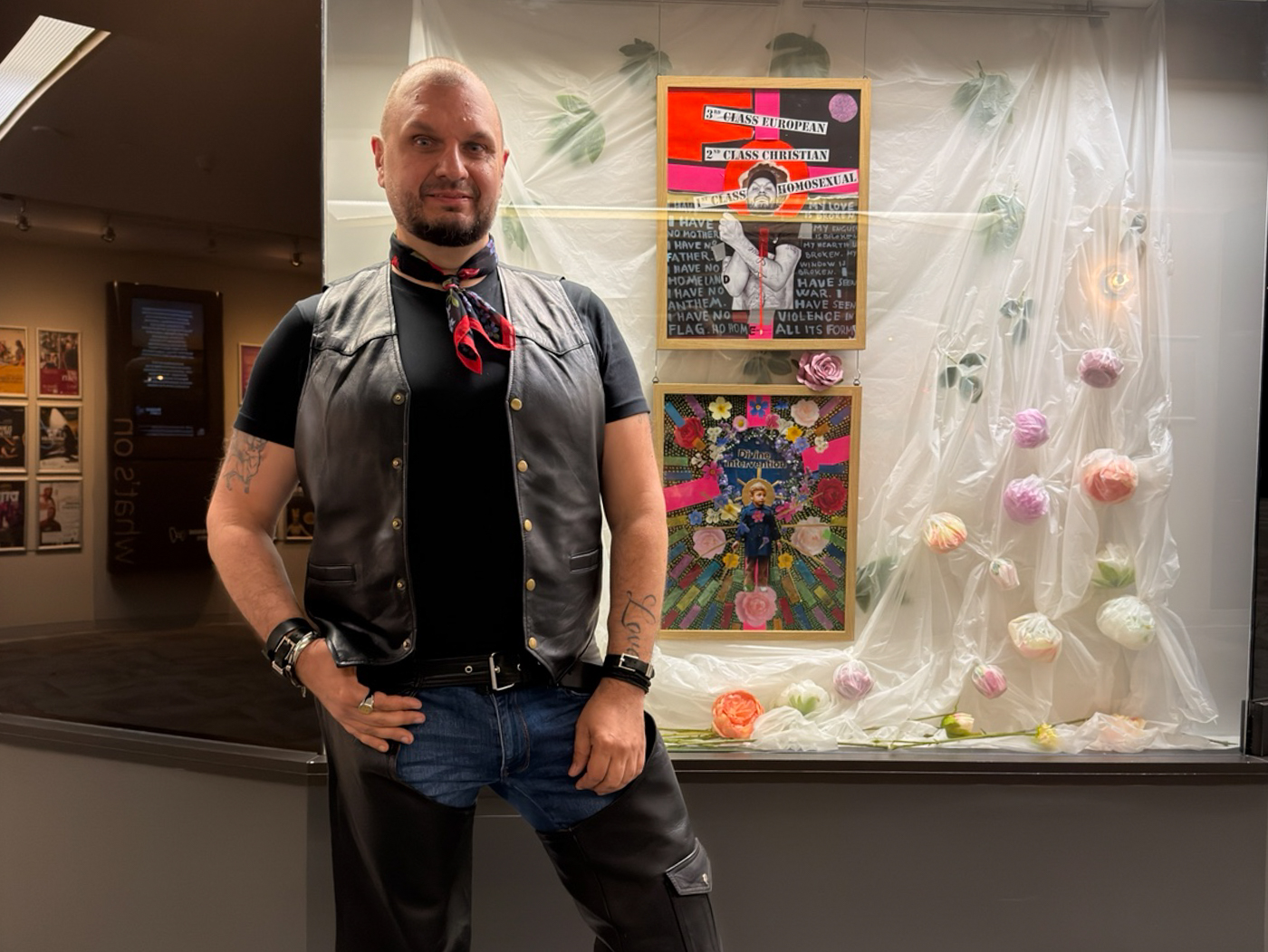
If you Google Boban Stojanović, you’ll first find him as a 2SLGBTQIA+ and human rights advocate. In Serbia, he co-founded the Queeria Centre and helped organize Belgrade’s Pride Parade. After facing violence and threats, he left the country and moved to Canada a decade ago.
In Canada, his activism took a different form — through art. His multilayered collages combine vintage imagery with fragments of poetry to explore identity, migration, queerness and resilience. He is also the author of the Serbian-language poetry collection This Could Have Been Our Living Room.
Beyond his artistic practice, Stojanović serves as Vice President at the Centre for Newcomers, where he supports refugees and newcomers as they build new lives.
Q: What first drew you to activism?
A: “My first experience with activism back home came while I was in mandatory military service. During the ’90s, the country where I was born, the former Yugoslavia, fell apart, and we started killing each other. I was very young, but I felt it wasn’t right, even though there was very strong government propaganda.
“That’s how I learned about anti-war groups and joined them. I met politically like-minded people, then feminists, politically engaged artists and queer people — very interesting people with stories and a mission in life. That’s how it all started.”
Q: Do you still consider yourself an activist?
A: “Yes. I think once you’re an activist, you always will be. It’s a way of life.”
Q: When did art become an essential part of your life?
A: “Art has always been part of my life, even when I was a kid. I grew up in a very violent family, so to survive, I had to create my own world. When I was around seven to 10 years old, I expressed myself through art classes, and that was the first time someone recognized my talent.
“When I was a teenager, questions like whether you were gay or straight became important. I was bullied by older students to the point where I hated going to school. Instead, I’d go to the local library, grab art books, and spend hours browsing.
“There was a coffee-table book called Art Now, and it featured a painting by Frank Stella. It was a minimalist abstract painting titled Nunca Pasa Nada, which means ‘nothing ever happens,’ like ‘everything is okay.’ Those words became my mantra. Whatever happens to me, I always say these words.”
Q: Why collage?
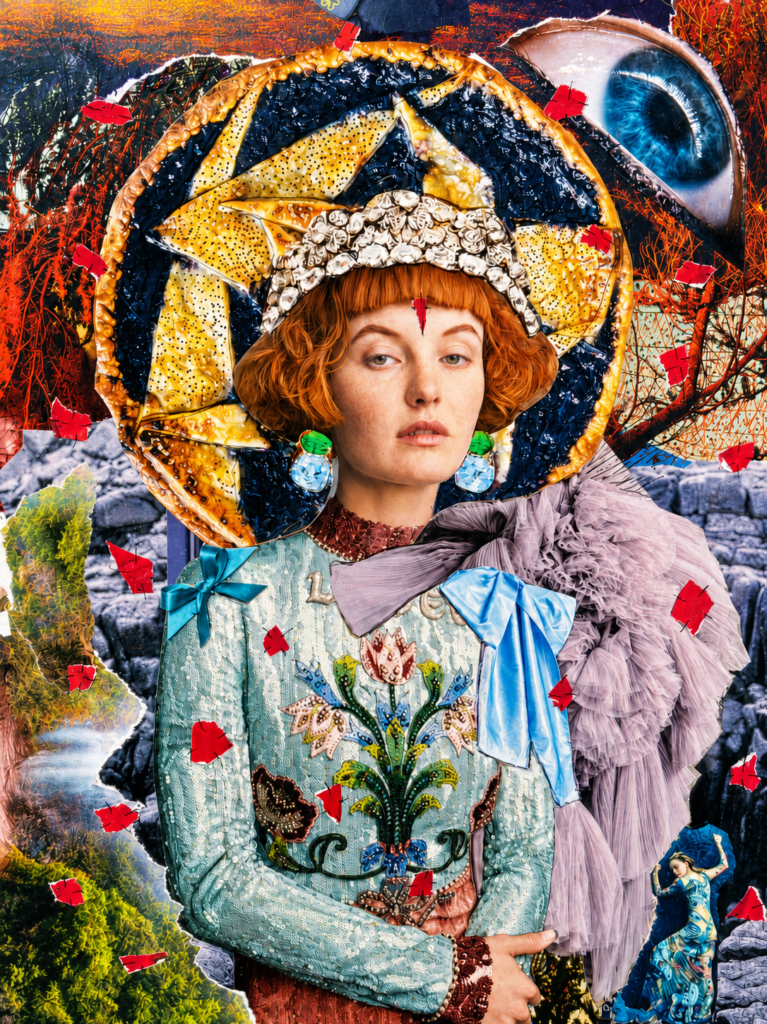
A: “Collage is my main medium. I was drawn to it because of my grandmother. She was a seamstress. Whenever she had leftover fabric, she’d use it to create something for my mother or the women around her. It was always eclectic and colourful.
“I became fascinated with bringing different pieces together and creating an entirely new story. I use what other people discard: old magazines, newspapers and photographs. I want to give those things a second life.”
Q: Who are the people in your collages?
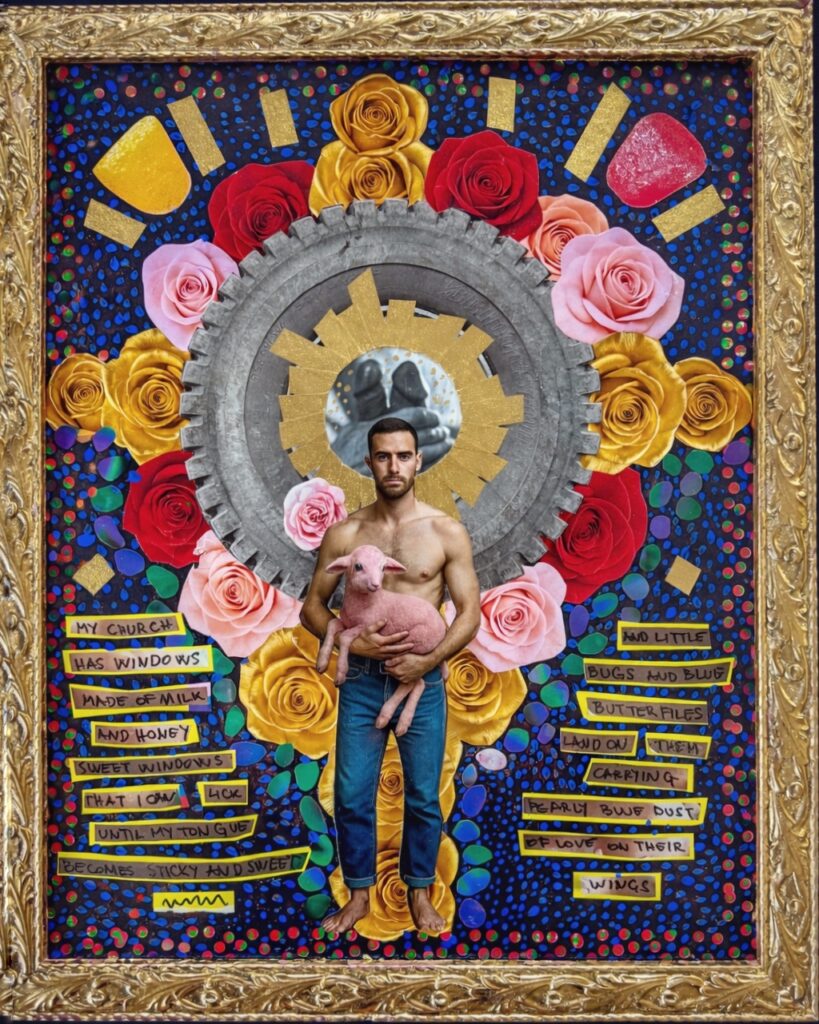
A: “Random people — fashion models or celebrities. For me, what matters isn’t who they are but the story I create around them.
“There has always been a lot of discussion around collage and copyright. I’m thinking of the photographers who took those photos. How would they see their work incorporated in my work?”
Q: Beyond identity, what ideas do you hope people take away from your work?
A: “My goal is always to create something beautiful, something eye-catching that evokes emotion. Emotion creates connection, and if people feel something, it means they’ve connected [with the work].”
Q: Despite everything you’ve experienced, how do you hold on to hope?
A: “I’ve created a whole philosophy around this. Bad things that happen in our lives are a matter of perception. You can go through hardship and get stuck there, or you can use it. As humans, we have the capacity to transform experiences. Art became my tool to transform pain and sadness.
“In a very bizarre way, I’m grateful for every struggle I’ve been through because it made me a better person.”
This Q&A was created in collaboration with the Werklund Centre.
Boban Stojanović’s work is currently featured at the +15 Galleries in an exhibition presented by the Calgary Queer Arts Society.
See more of his work on Instagram: @resilient_poet.