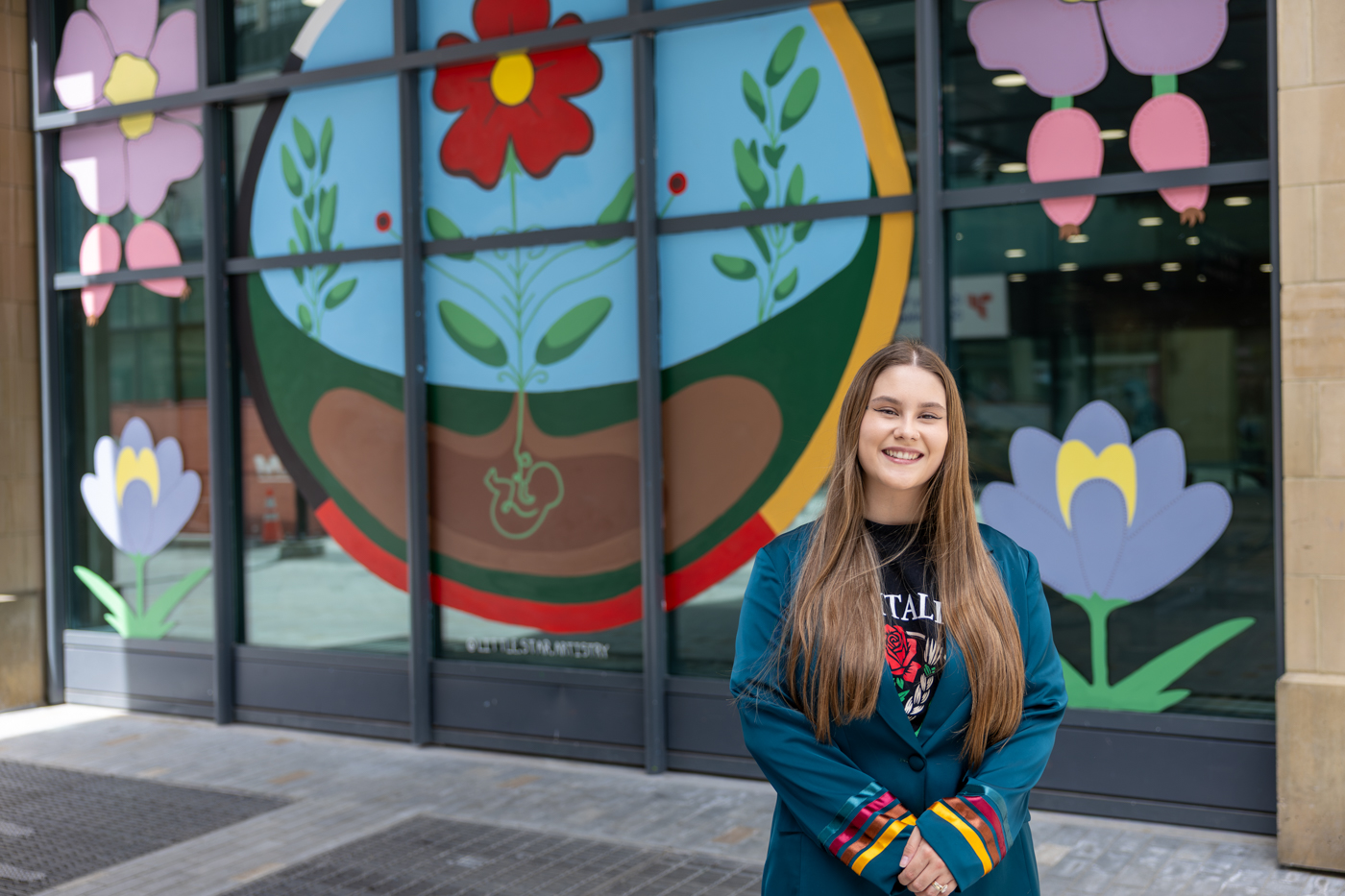

When Toyin Oladele moved to Calgary from Nigeria in 2017, she brought years of experience as a performing artist, curator, arts manager and educator. Yet, finding her footing in Calgary’s arts scene proved difficult: she struggled to find the connections and resources she needed to re-establish herself professionally. Her firsthand experience led to her founding the Immigrant Council for Arts Innovation (ICAI) two years later.
Since 2019, ICAI’s membership has grown to 500+ immigrant and newcomer art professionals. The organization has delivered more than 340 programs, workshops and professional development opportunities and has helped connect artists with over $212,000 in paid opportunities.
Today, Oladele is a community arts leader whose work extends beyond ICAI. She is involved in curatorial projects, including the City’s Northeast Public Art Initiative, and serves on the board of Contemporary Calgary. In this conversation, she reflects on her journey and shares insights into how artists and organizations can find their place in Calgary’s arts scene.
How did you build ICAI from an idea into an institution?
“I started with research, a lot of engagement sessions and having conversations with cultural and arts organizations. I went to settlement agencies and said, ‘Hey, if you know others who need the arts sector, I’m glad to support them.’ Before I knew it, I was speaking to over 70 people. We realized this should actually be happening.
“Then, I started creating mentorship and partnership programs. Today, it’s been seven years and we have over 500 members.”
What was the hardest part of building the organization?
“I think the hardest part was finding the sector and getting support from stakeholders. I was a newcomer. I didn’t know who to connect with or who the right stakeholder was to have conversations with.
“Sometimes I questioned whether this was even what I wanted to do because I was discouraged many times. But for some reason, I’m still here.”
What helped you succeed?
“It’s a combination of many things: not giving up, meeting the right people and co-creating with the community.
“There is nothing you’re going to see me do that I’ll do alone. Never. Some people feel like, ‘Oh, it takes the spotlight away from me.’ I don’t care about the spotlight. I care about people getting the service.
“If I find someone inspiring, I reach out to them. Sometimes people find you interesting and want to meet you, too. It works both ways. Once you do one thing right, the right people will also gravitate towards you.”
How has Calgary’s art scene changed since you started?
“There are more opportunities now than back then, absolutely. [The art scene] today has more visibility; there’s more funding.
“There are so many projects going on that you don’t have the choice but to see the art and engage with it. People are coming up with different innovative ideas.”
What kind of support do artists need most when they’re trying to establish themselves?
“I think people still need mentorship, especially young professionals or newcomers. In other careers, you can learn through the roles, but for the arts, it’s hardly like that.
“There are many other things that constitute barriers: your experience, your training, your colour, your culture [and] even language.
“One of the things I think can really help is to have centralized systems for handling these things. I don’t mean one solution for it all, but [solutions] that [are] in one place so that anybody can find what works for them — resources like toolkits or a dedicated team member to provide this type of information.”
What’s next for you? Another big project?
“I’m also doing some research on artistic projects and social impact projects. I want to design programs and services in other sectors for citizens: access to education, access to innovation in general.”
How to Get Into the Arts
Communication: “Start small in your community: school, friends, religious groups or cultural groups. Put up a show in your living room. Don’t wait until you get access to the big galleries.”
Partnerships: “Look for people who are already achieving what you want to achieve, and partner with them. Find someone you want to be like and reach out. If you try that with 50 people, at least one person will reply.”
Resources: “Look for ways to access resources for yourself and apply for grants.”
Be intentional: “Think about the kind of work you do and the people you invite into your spaces. Don’t just try to invite as many people as possible. Instead, invite a specific audience.”
Keep going: “Don’t give up and talk about what you do.”
This Q&A was created in collaboration with the Werklund Centre.
To learn more about ICAI and its programs, visit icaionline.org.