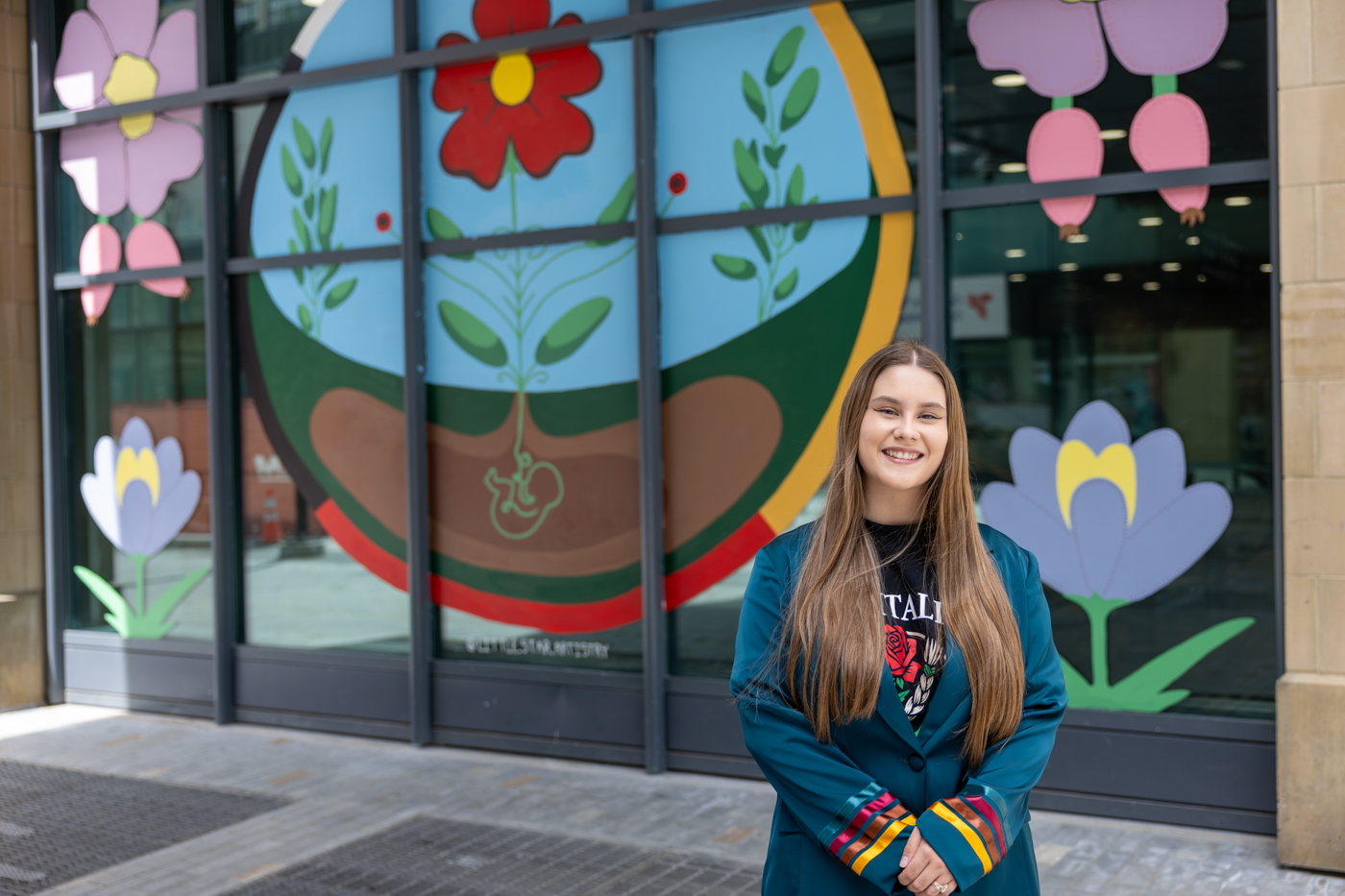
Anishinaabe-Métis born and Calgary-based, Dorienne Proulx started her artistic path at a very young age. From dancing at powwow, she grew into beadwork and making regalia pieces. She now runs Little Star Artistry, which produces jewellery and pop-ups and provides Indigenous cultural performances.
Her artwork has been exhibited through the +15 Galleries with Calgary Queer Arts Society and in murals at the Telus Convention Centre.
Beyond her artistic practice, Proulx works with the Indigenous community at a drug and alcohol treatment centre. “While art supports us emotionally, there’s so much work to be done on the front lines of our communities,” she says.
Q: How would you describe yourself as an artist?
A: “I’ve been a professional artist for about six years now. It started with painting acrylics on canvases, and then grew into exploring other practices like beading.
“Contemporary jewellery has been a way to decolonize daily fashion. I have tons of customers who are non-Indigenous and wear my work as a sign of appreciation towards our culture.
“The goal around my practice is to create bridges between Indigenous and non-Indigenous communities and bring often complicated conversations about colonization and history into a positive space and build connection through art.”
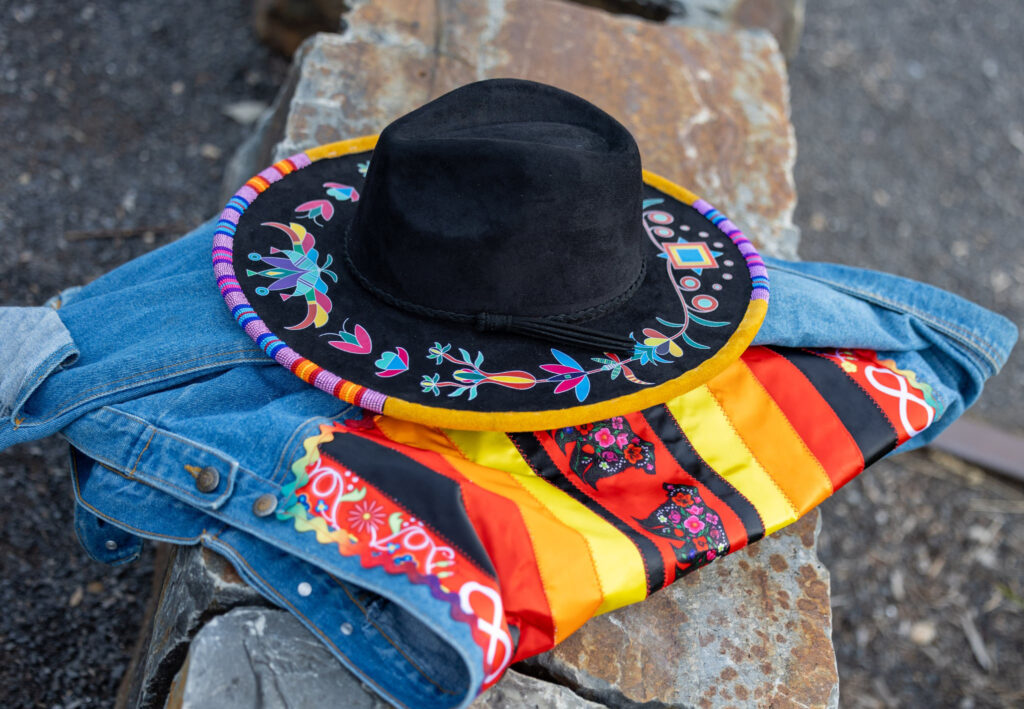
Q: Could you explain what “decolonizing fashion” means?
A: “In our culture, a lot of materials that would often be disregarded are immensely valuable to us, like elk ivory. Being able to use pieces that come from the land and animals is a way to show what our community reveres as valuable.
“For me, decolonization in fashion means we’re able to move beyond a Western view of fashion and represent other cultures.”
Q: In the Native Calgarian podcast, you said, “Time is changing and being Indigenous changes.” What does being Indigenous mean to you today?
A: “As society progresses, our healing from things like residential schools is going to progress, too. Time and effort have been put in, whether it’s through ceremony or therapy.
“We’re changing what the community looks like, and in my opinion, in a good way. Powwows and outfits have become more contemporary. Our ceremonies, depending on your ceremony grounds, are opening up to non-Indigenous people.
“So many of us are getting educated. There was a time when we couldn’t vote. So now, being able to become professionals and to change what people see as an Indigenous person is what most of us strive for.”
Q: Could you tell us more about your work at the +15 Galleries and how it explores kinship?
A: “The piece started because Robyn [of Eagle Medicine Coaching] did a display on Wâhkôhtowin (kinship). She used red thread and had us all hold it to show that if I tug, someone else feels it. With her permission, I started to draft my idea around that piece.
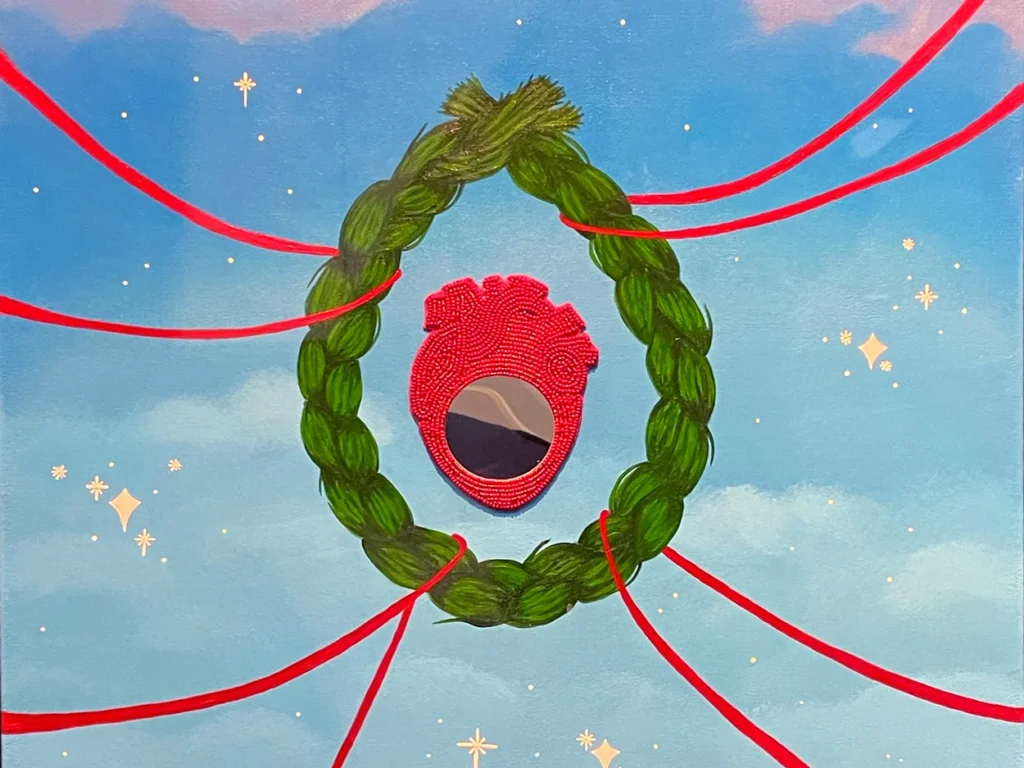
“Red threads are a physical representation of connectedness, and the beaded portion of the heart is to visualize what connectedness can mean.
“At the end of the day, we’re all human beings that have a beating heart, and no matter how hard we try to let go of certain threads, we’re connected to everything: our communities, the earth, places that we live. That’s essentially what Wâhkôhtowin would mean.”
Q: As we approach the National Day for Truth and Reconciliation, how do you feel Calgary’s attitude toward Indigenous culture has changed?
A: “When I was in elementary school, we didn’t have cultural showcases. Seeing that we are taking steps towards inclusion is something that I’m really relieved to see.
“We’re seeing businesses show their support. We’re seeing people engage with us and attend events. And while we have so many wonderful days throughout the year when we can support the community, this is a reality that Indigenous people live with 365 days a year: we do still experience racism and violence. Many of our communities still don’t have fresh running water or access to equitable healthcare.
“Sitting in humility and recognizing that we still have so much work to do is not inherently negative. There’s so much power in recognizing our faults — not the faults of my own community, but our faults — and choosing to take steps in the right direction.”
This Q&A was created in collaboration with the Werklund Centre.
Dorienne Proulx’s work is currently featured at the +15 Galleries in an exhibition presented by the Calgary Queer Arts Society. See more of her work on Instagram: @little.star.artistry