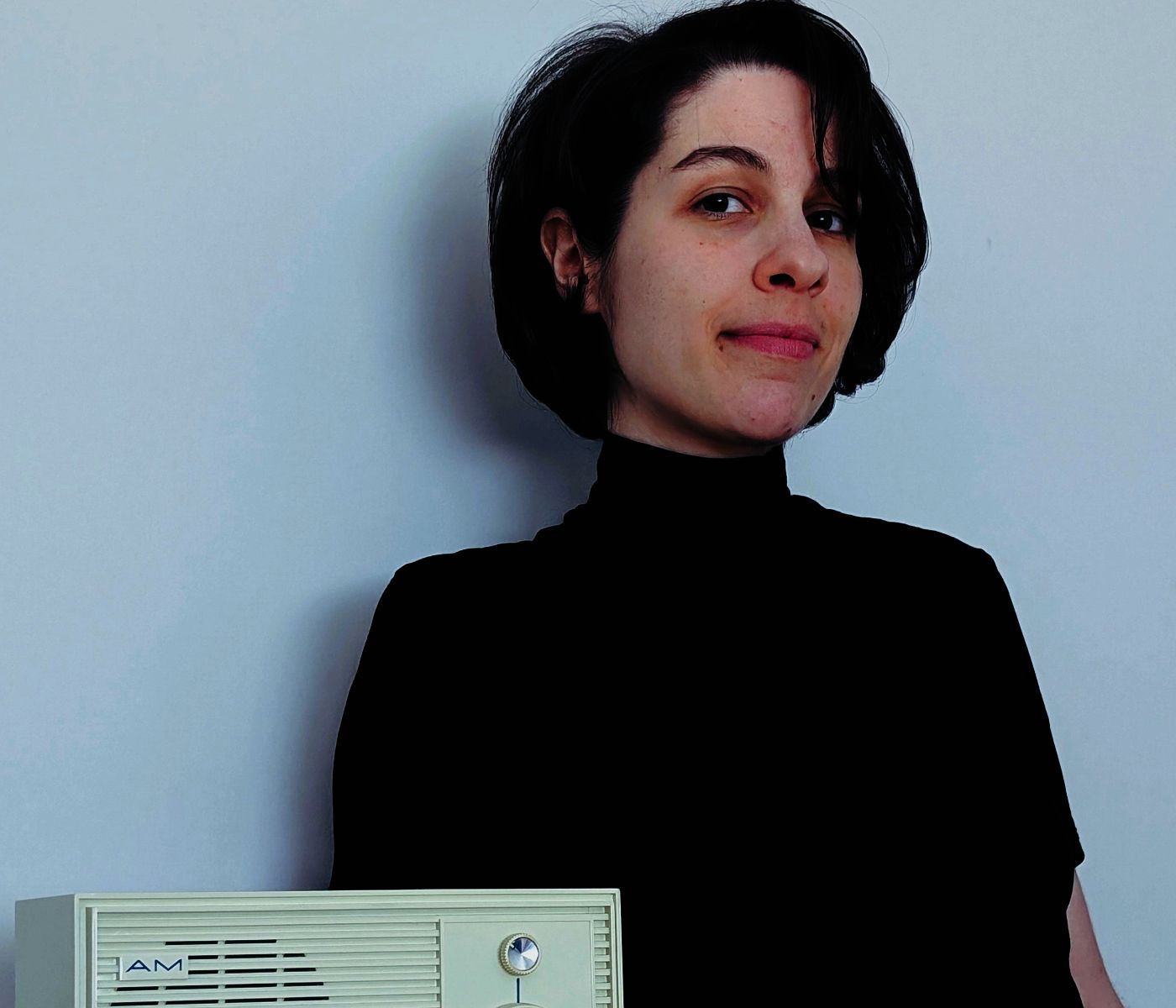
It’s been about nine years since Melike Ceylan came to Calgary to pursue a PhD in music at the University of Calgary. She later worked there as a professor teaching music technology, experimental radio, and audio programming. Artistically, her work has been presented in art exhibitions, radio broadcasts, theatre productions, and live performance settings across Canada and Europe.
While she has always worked at the intersection of music and science, her current focus is sound art. “Since graduating, I’ve also been exploring what it means to be creative outside of the academic context,” she says.
She is currently working on a +15 installation project with Werklund Centre titled Flow that centres reproductive health advocacy and awareness through sound and music.
Bridging Research and Art
“It was during the early pandemic when I had a creative block. I decided to take a short break and had the opportunity to work with students online. When the course was over, I returned to my creative work feeling completely refreshed. I was inspired by what students brought to the table, their questions, their ideas.
“There is a whole area of research called research-creation, where the creative process itself is your research. You start with a question, and as you work, new questions emerge. Those questions then inform how you adapt and evolve your practice.
“I’ve been focusing on understanding and evaluating what comes out of the creative process. I arrived at ideas I couldn’t have achieved just by reading. I had to actually do the work to discover those technical and aesthetic possibilities.”
On The Radio
“I like to call it ‘experimental radio.’ It takes the basic elements of radio — a host, music, ad breaks — and twists them in ways we don’t expect. For example, the host might switch places with the audience, or there might be moments of dead air. Experimental radio can turn those disruptions into sound pieces.
“The main focus of the broadcast is not hesitating to make bold choices, and sometimes creating work that is critical of mainstream radio, its consumerist and advertising-driven aspects.
“I grew up in a household where radio was always part of our lives, and I really enjoyed that. One of the biggest things is intimacy: there’s no visual aspect — it’s just someone speaking directly to you, in your room.
“I volunteer at CJSW Radio, and the community is amazing. I host a music program called Vocal Cords where I focus on curating playlists. It’s a small station, but you can find all kinds of music. People are actively looking for a break from mainstream media, so there’s huge diversity.”
Abstract Sounds
“I use a few strategies [to create sound for my project]. One approach is to take a graph of hormonal changes throughout a menstrual cycle and turn it into a sound wave using the Wavetable Synthesis method. You use the data to create the timbre of the sound.
“Another approach, which became the main one for this soundscape project, is using metaphors. Sounds from nature can represent bodily sensations.
“Voice is one of my primary instruments because it’s immediately accessible to me. I also use virtual instruments or recordings from our environment — things like hand claps or plastic wrap — and apply audio effects to turn them into long, sustaining drones or more rhythmic textures. I play with those sounds in musical terms.
“When it comes to non-traditional music listening, I try to create a more pleasurable experience. If someone doesn’t know the message behind the work but can still enjoy it and find their own meaning, that means success to me.”
Limitations
“I discovered that I work very well with limitations. The first piece I worked on during my PhD research felt intense, so I decided to limit myself to a very small number of recordings. That helped a lot.
“I approach creativity the same way, because otherwise it can become overwhelming. I try to define constraints — whether that’s limiting sound materials or time.
“There is so much to discover even with the smallest amount of material.”
The installation Flow is on view at the Werklund +15 Gallery until April 15.
This Q&A was created in collaboration with Werklund Centre. To see more of Melike Ceylan’s work, visit melikeceylan.com.