At a time when Netflix seems to have a new true-crime docuseries waiting every time you open the app, the Calgary Underground Film Festival is making an argument for getting off the couch.
Returning to Globe Cinema from November 18 to 22 for its 14th edition, CUFF.Docs began as an offshoot of the Calgary Underground Film Festival when programmers found themselves turning away strong documentaries simply because there wasn’t enough room for them in the main festival. Since then, CUFF.Docs has developed its own programming identity and loyal audience.
For lead programmer Cameron Macgowan, that growth comes down to attendees learning what it feels like to experience CUFF.Docs as a community, and the sense of discovery that comes with thoughtful curation.
“We have remained consistent in our programming voice and Calgary audiences have developed an idea of what our documentary programming sensibilities are and hopefully trust our taste,” he says. Macgowan explains that the one criteria that has become particularly important is that the films need to feel larger than life.
“There are countless documentaries that you can watch at home, so we ensure that the ones we select at CUFF.Docs truly feel exciting, special and most importantly, cinematic,” he says.
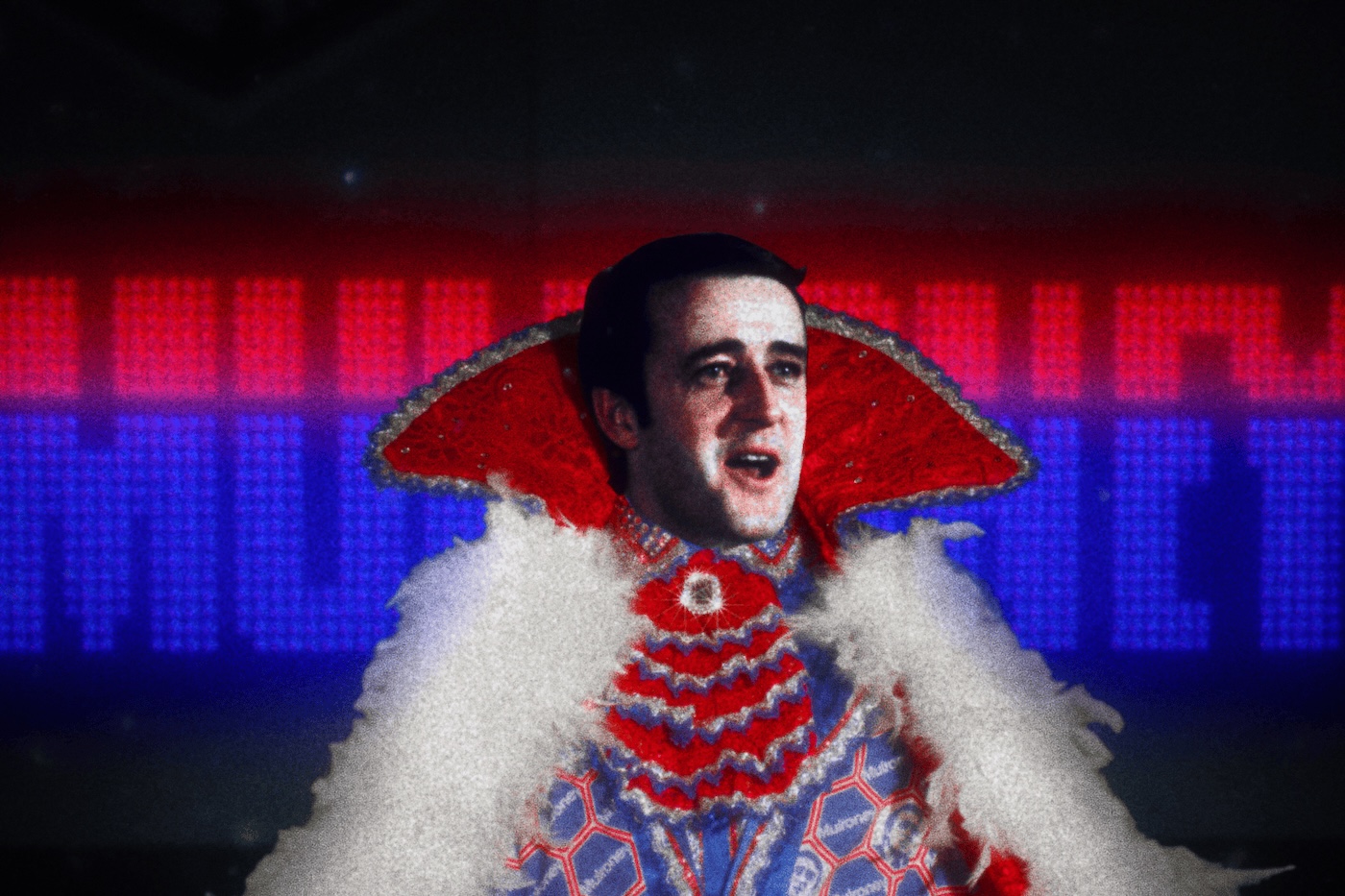
Few films make that case quite like Winnipeg-born filmmaker Matthew Rankin’s Ladies and Gentlemen, Brian Mulroney. Rankin zeroes in on Mulroney’s transformation from the “Boy from Baie-Comeau” into the political phenomenon who would win the largest parliamentary majority in Canadian history in 1984, filtering 80,000 pieces of archival material through animation, collage and other visual interventions.
“It approaches conservatism as a form of psychosis,” Rankin says. “Of course, the film does have a satirical gaze upon its subject — it is not a work of journalism or cinéma vérité — and I use surrealism as a tool for depicting factual events.”
While rooted in the 1980s, the film questions charisma and the media’s place in today’s political spectacle. Rankin points to a media landscape that has fundamentally changed since Mulroney’s rise.
“In Mulroney’s time, he was still beholden to broadcast television and journalists to get his message across,” he says. “Media was a buffer. That was annoying to Mulroney but, I think, good for democracy.”
Despite the film’s deep immersion in Canadian political history, Rankin doesn’t see specificity as an obstacle to reaching audiences who may not be well-versed in the topic. “I think by going intensely specific you get somewhere universal,” he says.
As Rankin pushes documentary toward fever dream, Alberta-born Cree filmmaker Alexandra Lazarowich explores artistic vulnerability with her first feature, Turtle Island Rap.
Following Indigenous rappers A$h Da Hunter, Wiidaaseh and Travis Thompson at different stages of their careers, the film moves beyond their performances to capture the less glamorous realities of pursuing an artistic life: jobs, money, family, rejection, community and the work behind the wins audiences eventually see.
“There was a specific moment we were filming with Travis in Fort Defiance that I still get teary eyed when I see on the big screen,” she says, recalling watching community members of all ages singing his lyrics back to him. “In that moment, I realized the film is about Native joy.”
Its CUFF.Docs screening also marks a homecoming of sorts. Lazarowich last attended the festival seven years ago with her short Fast Horse, and now returns to Alberta with her first feature following its world premiere at TIFF.
“I hope people take away from the film that even though sometimes life throws obstacles in our way, we have to put one foot in front of the other and keep going,” she says.
CUFF.Docs gives these movies, and many more, somewhere to be experienced and celebrated collectively. With many of the filmmakers behind this year’s selections in attendance, Macgowan sees the festival as both an antidote to streaming isolation and a reminder of the film community Calgary already has.
“There are many like-minded cinephiles in Calgary that want to watch the same cool movies that you do.”
— CAMERON MACGOWAN, LEAD PROGRAMMER AT CUFF.DOCS
As for what audiences should see? Macgowan deliberately avoids prescribing an exhaustive list. Instead, he recommends reading the program, finding something that sounds interesting and going in without researching it to death.
“In my opinion, movies are best enjoyed knowing as little about them as possible beforehand,” he says. Another CUFF.Docs rule? “Everyone must try one CUFF [hot] Dog in their life”. Preferably, one imagines, without researching that too extensively either.