Calgary’s art community is growing and evolving right before our eyes, in the best ways possible. Particularly, more Indigenous artists of all creative and cultural backgrounds are adorning our institutions, touting their unique voices through various artistic mediums. Whether it be through music and film, teaching art to the next generation or working the stage, these creatives play a significant role in what makes the city’s art scene so special.
Here we explore the work of three local Indigenous artists.
seth cardinal dodginghorse
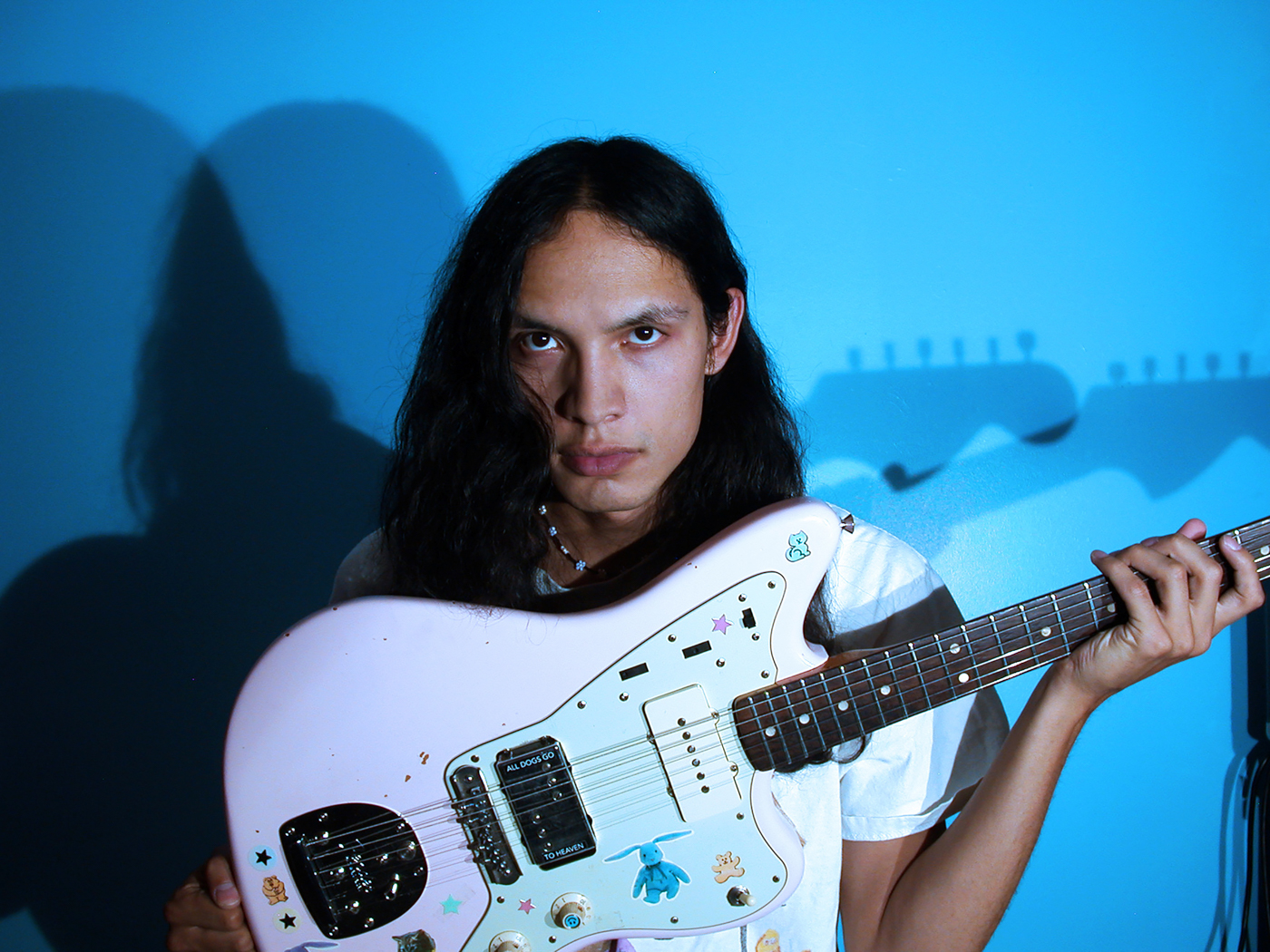
seth cardinal dodginghorse grew up surrounded by artists. From a young age, they observed the practices of their mother, using traditional Indigenous materials like hide and regalia for her work, and their aunt and uncle, who immediately handed them a pencil and taught them to draw.
As they developed into their own as an artist, their mediums of creation expanded into film, photography, music and more, earning cardinal dodginghorse several accolades for their work.
At first, cardinal dodginghorse didn’t lean into their Indigenous roots with their art like their family had always taught them to. It was their family’s displacement from their land during the construction of the Calgary Ring Road that set cardinal dodginghorse’s art on a more political path.
“The Ring Road project was a lot of people being silenced in the community and people in my family,” says cardinal dodginghorse. “As I was processing [that event] and creating work, it really changed in that short period of time from being very focused on nostalgia towards my memories, to the land and my family.”
The shift from nostalgia to activism drove their work in film, emphasizing the Indigenous experience, which eventually led to their breakout role in the short film Klee directed by Métis filmmaker Gavin Baird.
“[Baird] sent over this script, and it was the wildest thing I’ve ever read,” says cardinal dodginghorse. “The film is very… visceral. There’s a lot of really wild, insane things that people see in the movie.”
The film follows Klee, an alien that takes on the form of an Indigenous man and then infiltrates a settler community and begins to seduce community members. As the story unfolds, people in the community go missing and are discovered murdered by Klee. The film reached the big screen and made its debut at the 2025 Toronto International Film Festival.
In 2019, their mother, Glenna Cardinal, approached them with an unexpected request. She wanted cardinal dodginghorse to help her find her artistic voice.
“I call it reverse nepotism,” says cardinal dodginghorse with a laugh.
In 2022, the pair completed a Visual Arts Residency at the Banff Centre for Arts and Creativity. cardinal dodginghorse was hesitant to do the project with their mother at first, but says it turned out to be a pivotal experience.
“At that time, the best art I’ve ever made was with her,” they say. “I feel like every time we collaborate and do projects together, we really push each other and make things that neither of us could dream of, which is always amazing.”
Visit the pair’s latest exhibition at the Nickle Galleries at the University of Calgary starting September 17.
Dogii Chow
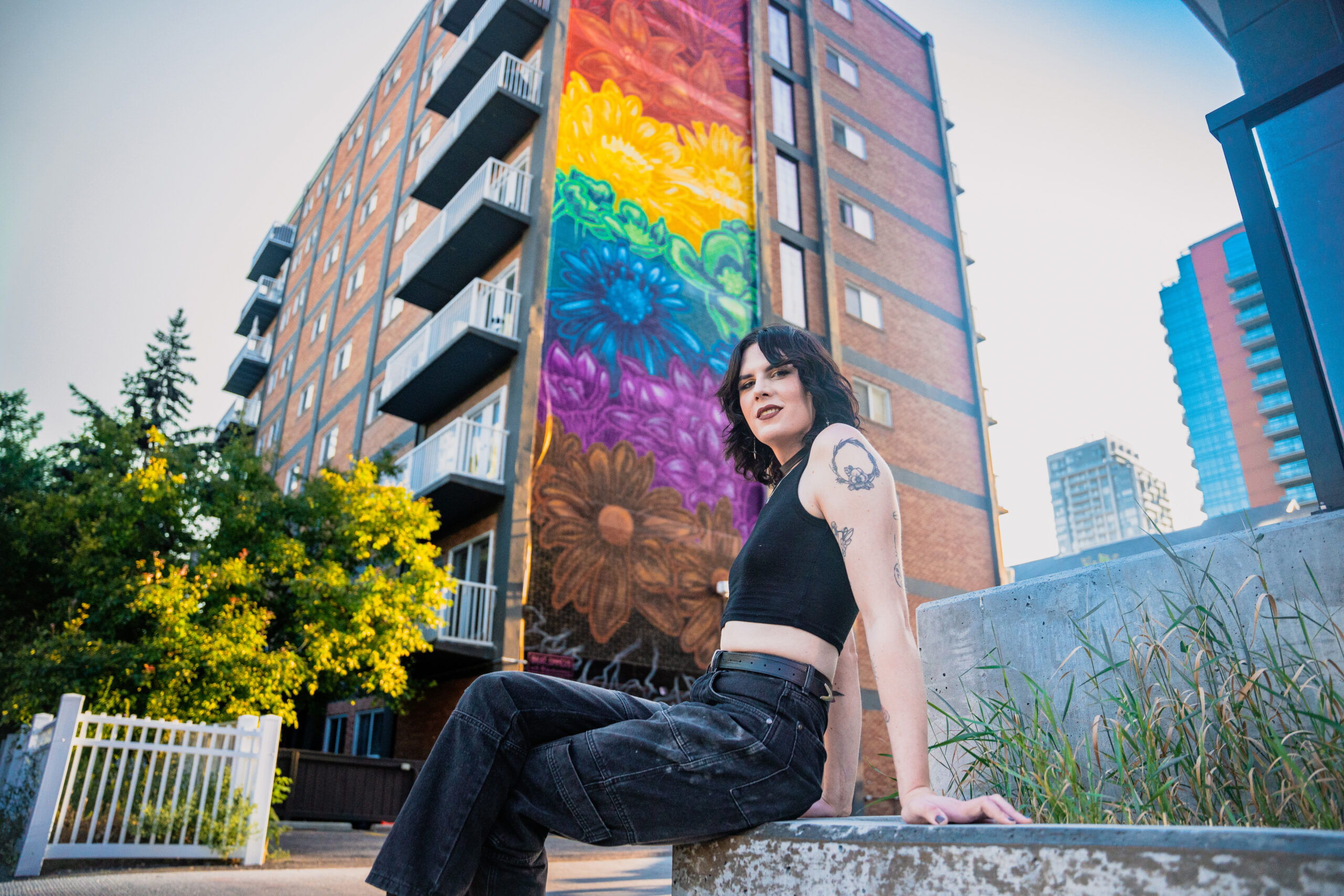
Dogii Chow always wanted to be a Drag Queen. They grew up watching iconic Drag films like To Wong Fu, Thanks for Everything! Julie Newmar; Priscilla, Queen of the Desert; and Connie and Carla, which sparked their desire to adorn the stage as those queens and make it their own.
At first, something always held them back. Dogii Chow was told that being female meant they would never be welcomed into the drag community. At the time, their desire for drag was a distant dream.
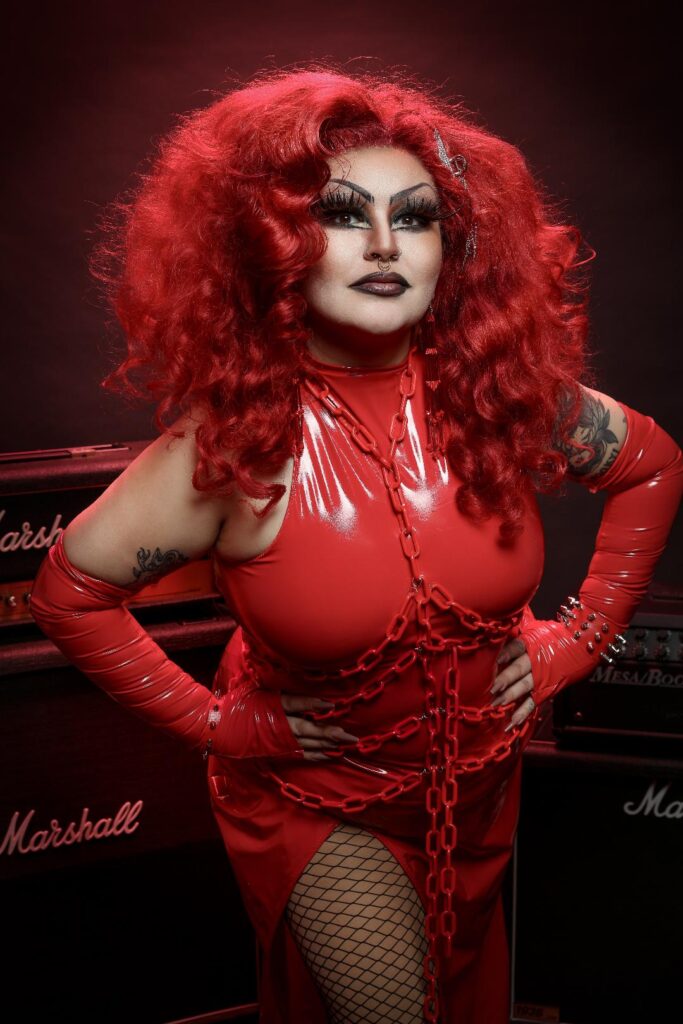
Now, Dogii Chow is a household name in the drag community, self-titled the Two-Spirit Thunderclap. They are headlining local shows, co-hosting They Got Talent — a drag showcase and competition hosted by Dickens Pub — proving night after night that their unique intersectionality of being a female, Indigenous drag queen isn’t only acceptable, but celebrated.
“It’s really shocking whenever [people recognize me],” says Dogii Chow. I went to a store with my girlfriend, and someone was like, “You look familiar. Are you Dogii Chow?’ And I went, ‘Yeah,’ and they got starstruck. It was so weird because I’m like, ‘I’m just here buying mac and cheese.’”
In 2020, Dogii Chow first started to dabble in performing and started going by their iconic drag name, a title inspired by yet another iconic piece of cinema, Showgirls.
“There’s a line [in the film] that talks about eating doggy chow, and I really like that. Also, I like that it was gender neutral, and a little gross.”
Just as Dogii Chow began to soak in the thrill of finally performing, the COVID-19 pandemic hit, shutting down the glow of the stage lights for a long time.
The pandemic took a heavy toll on the budding drag queen, and amidst the lockdowns, they eventually developed debilitating agoraphobia (fearing and avoiding places or situations that might cause panic). It wasn’t until 2023, when Dogii Chow’s partner suggested Dogii Chow go out and find some performing gigs, one of the few things that convinced them to step back into the world.
View this post on Instagram
While performing again helped them find their footing again, cover to attend other drag shows remained a problem. So what does a queen do in such a situation? For Dogii Chow, funding their attendance to performances meant becoming the talent.
They began performing with They Got Talent to fund their cover to shows, and became part of the drag group’s faculty in 2024.
Finally free to explore their drag at full throttle, Doggi Chow says their performer identity has molded into an extension of who they are.
“I enjoy being a person that’s talking about being Indigenous, about being Two-Spirit, about being non-binary, about being neurodivergent. I encompass all these things,” says Dogii Chow. “I’m also a weirdo, so I do enjoy bringing those aspects to my performance and to my drag.”
They say it’s also the inclusive energy in our city’s drag community that keeps them coming back to the places and faces they love onstage.
“There is so much, especially in Calgary, that goes outside of [male drag queens]. There are so many trans performers here, and it’s really cool. Calgary really is something special.”
Grab your fives (or your tens or twenties) and catch Dogii Chow in full beat — for the gods! — every Tuesday at Dickens.
Autumn Whiteway (Night Singing Woman, Circling Eagle Woman)
Activism is in Autumn Whiteway’s blood. Her art thoroughly reflects this.
“Every single artwork is infused with story, or a piece of me,” says Whiteway.
Whiteway has three degrees in archaeology, a discipline that has always driven her curiosity in creating, and how her identity as a Saulteaux woman defines her art.
“There’s often so much more to see in Indigenous artwork that people may pick up on, which makes it important when you’re talking to an Indigenous artist to maybe ask them what their artwork is about.”
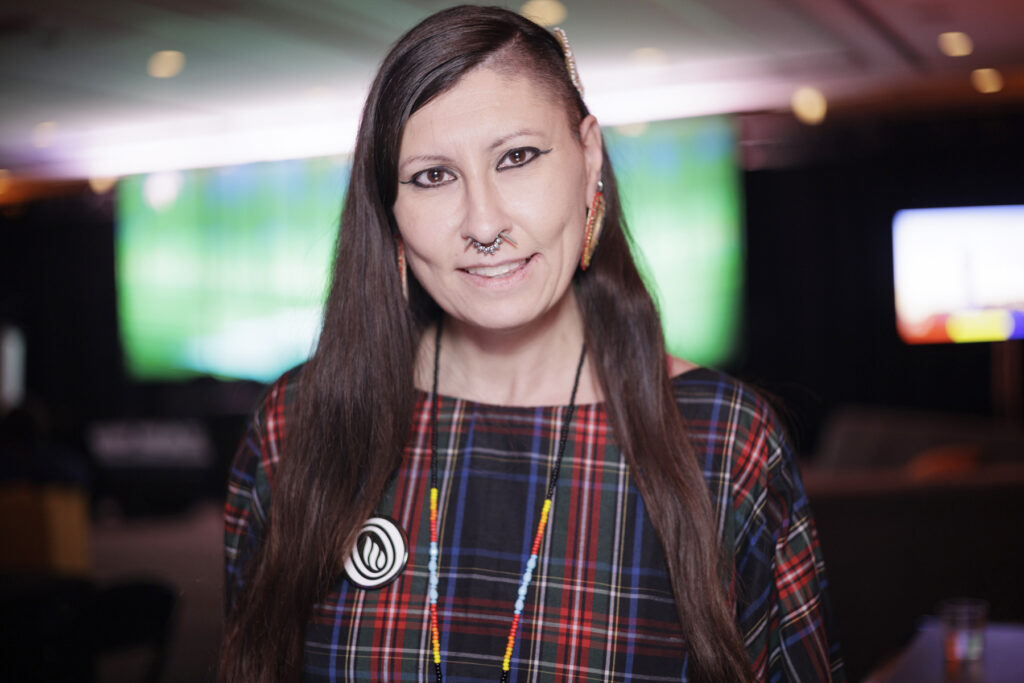
Among Whiteway’s various mediums of creating, Woodland Art — a colourful 2D Indigenous art style that emphasized the X-ray-like features of the “inner spiritual life” of animals and people — is one of her favourites. She teaches the artform at different institutions, including Werklund Centre and Jube School, an experience she says is very rewarding as an activist-artist.
“I just think [teaching art] is so incredible,” says Whiteway. “I’m always surprised with each classroom that I work with. When they start translating to me the details of their artworks and what they mean to them, it’s always very inspiring.”
Whiteway knows that the journey in educating others on the Indigenous experience and advocating for better representation can be gruelling for artists. But to her, that work is non-negotiable.
“We have been misrepresented for so long,” says Whiteway. “People just don’t realize that there’s a lot of us out there that are getting an education, raising families, being part of community, volunteering and running businesses, but those aren’t the stories that people have often been told about Indigenous people.”
Whiteway has made a significant name for herself in Calgary’s art community, having been featured several times by the Werklund Centre, Indigenous markets, and churches around the city.
“It’s so important to have that kind of representation in those kinds of institutions. Some of those institutions have been working hard at decolonizing because they are very colonial spaces. So to be welcomed into that as an Indigenous person is part of their decolonization work. It’s a great honour.”
To see Whiteway’s art, visit the Calgary Unitarians Church on September 19.