Indie theatre companies work on proverbial shoestring budgets, and among their constant cost pressures is performance and rehearsal space.
“Community theatres struggle to find affordable space,” says Kyle Gould, president of Calgary’s Alliance of Community Theatres (Calgary-ACTS). During this season, the Alliance’s 22 member companies will mount 46 productions. Many of those shows will take place in the Pumphouse Theatre.
Sabrina Mueller, the Pumphouse’s production and operations manager, says keeping the Pumphouse affordable is a priority — the rent has increased only five times over the past 17 years.
To increase affordability, about 10 years ago, the Pumphouse introduced two rental configurations for its large Victor Mitchell Theatre. Organizations can rent the entire Victor Mitchell, or rent the “Shed” configuration, which includes only the main-floor seating of 135. The Shed costs $250 less per performance to rent.
While the Pumphouse is doing what it can to remain financially accessible, there is serious competition for space. More than a dozen companies use the Pumphouse regularly, and most of them book the Victor Mitchell for two-week runs.

Gould says not all companies can fill a theatre the size of the Victor Mitchell for two weeks, nor do they have the money to do so. But the Pumphouse’s smaller, more affordable option — the Joyce Doolittle — which has a capacity of 62, is now primarily unavailable due to a lack of parking availability.
During the pandemic, The City of Calgary reclaimed the parking lot next to the Pumphouse, says Mueller. Because of this, the Pumphouse can no longer rent both of its theatres at the same time due to a lack of parking. As the Victor Mitchell is already near one-hundred percent occupancy, there is little to no opportunity for a show to go up in the Joyce Doolittle.
Because of these issues with the Pumphouse, Gould says, some community theatres are looking to venues like the West Village Theatre, Theatre 1308 on Edmonton Trail, Inglewood’s Lantern Church, and, even, theatre spaces at charter schools.
However, Gould says problems exist with re-purposing churches as performance venues, as churches don’t have all the technical equipment necessary to stage certain shows.
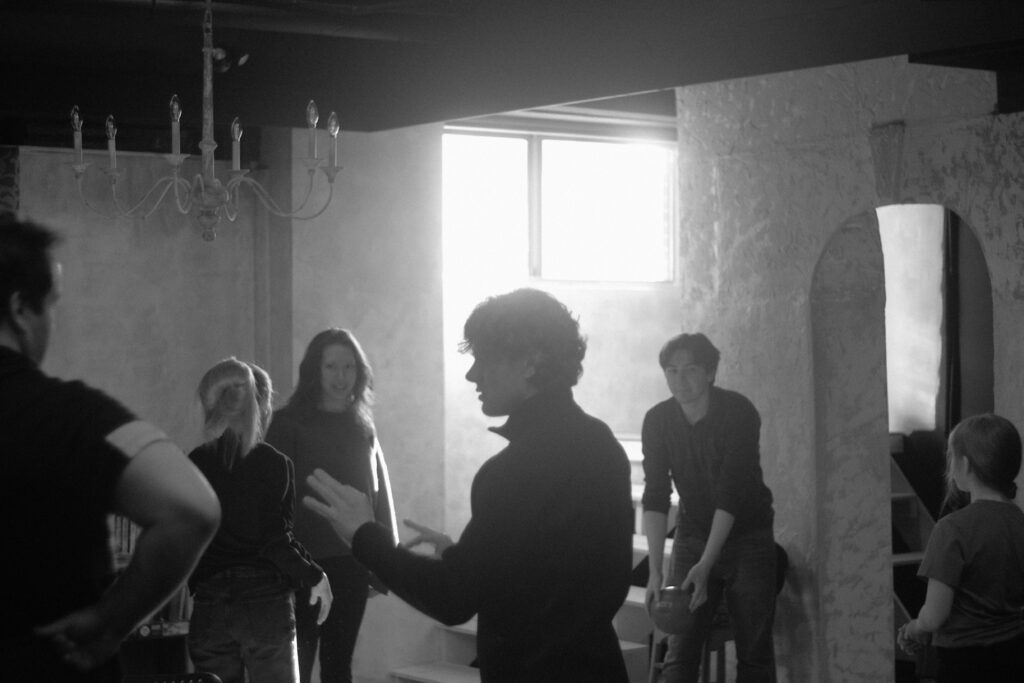
Claire Bolton, the co-artistic director of Full Circle Theatre, echoes Gould’s concerns. “It can be hard to find spaces for small indie companies. There are a few spaces that allow for small theatre companies to put on a show with lights, sound, full blackouts, and a fair-sized audience capacity within a price range that isn’t going to put people into debt,” she says.
Bolton and Gould agree there’s a dearth of well-equipped, affordable theatre spaces in the 50-to-100-seat range, particularly for small companies. Gould estimates that around eight more small, black-box theatre spaces with proper production equipment are needed in Calgary to serve the needs of these small companies.
Due to the current lack of appropriate and affordable space some productions simply aren’t happening, Gould says. And some companies are turning to the “great outdoors,” as is the Incendiary Festival, which is looking at securing performance permits for Fish Creek Park.
And it’s not just volunteer-driven, community theatre companies that are struggling with the issue of affordable space. So, too, are small professional companies like Inside Out Theatre. Col Cseke, Inside Out Theatre’s Artistic Director, says the company encountered significant difficulties finding affordable performance space to rent with the necessary technical equipment.

Eventually, Inside Out decided to lease and renovate its own performance space. Located in the Beltline, The Erratics Arts Club will house a studio theatre that seats up to 100. The facility is set to open this summer.
“Affordability and accessibility have been our priorities… We cannot plan for our renters to pay for the full operation of the space,” Cseke says. He says the Erratics’ business plan will see rental fees covering about half of the venue’s operating costs. The remainder will come from grants and sponsorships.
And, unlike some other venues, there won’t be additional fees stacked on top of the base rental for mandatory house technicians and front-of-house staff.
“There’s something really meaningful about having this new asset to offer our community,” Cseke says, noting that high staging costs mean “less work happens, and companies do fewer shows with fewer actors.”
Another Calgary company that operates out of its own space is the theatre, which debuted its inaugural season this year. Its black-box venue in the base of a Victoria Park condo building seats between 40 and 80.
Abagail Vanmerlin, the theatre’s co-director, says that even though they own the performance space, it still costs around $400 per operational day to cover costs. “Most artists would not consider this an affordable daily rate, but it’s just the reality of operating a physical space… The real question, I think, that many artists struggle with is: ‘Who should pay for the spaces that art is performed in?’” says Vanmerlin.