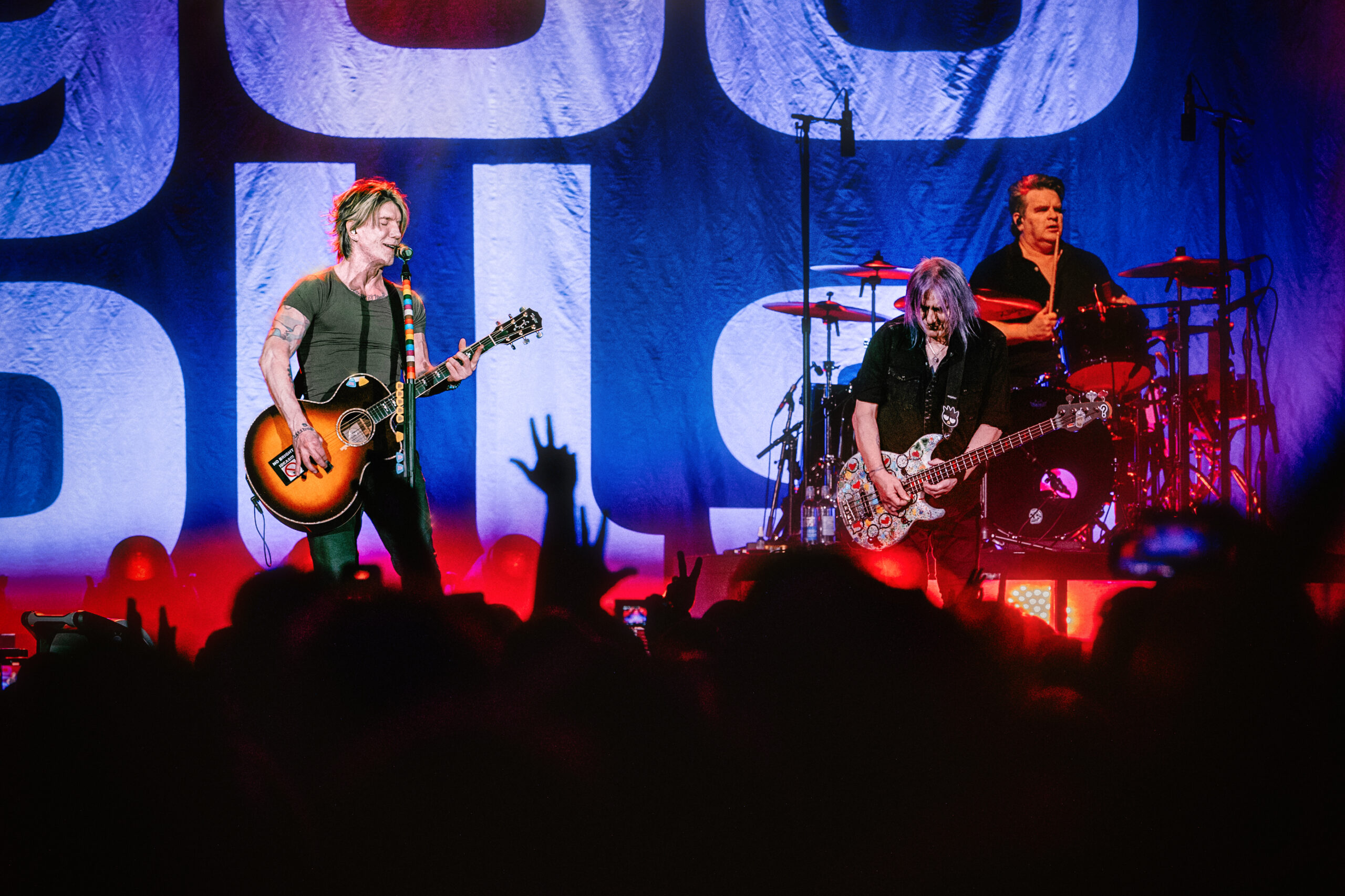
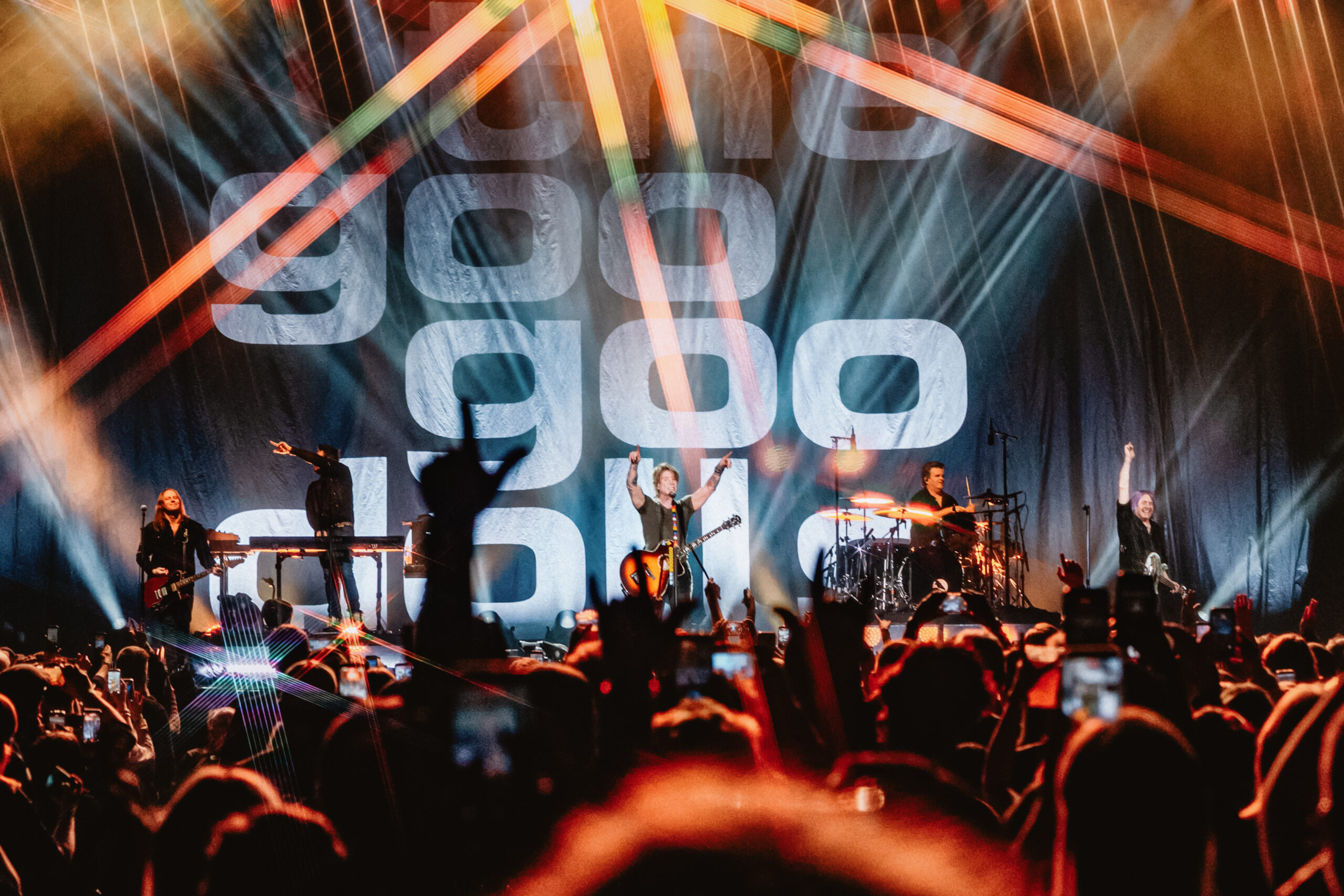
A cross-generational crowd flocked to the ‘Dome on March 23, 2026, to catch a pair of bands synonymous with ‘90s and early-’00s nostalgia. The Goo Goo Dolls, riding the momentum of a mega-viral trend, and third-wave emo cornerstone Dashboard Confessional, came to Calgary in the midst of their 14-date Canadian spring tour.
It wasn’t always flashing arena lights for the Goo Goo Dolls. The Buffalo natives spent the majority of the ‘90s putting out punk records and didn’t achieve commercial success until their fifth album, A Boy Named Goo, which included their breakout hit “Name” in 1995. “We started out being this punk rock band … travelling around all of North America, all beat to shit,” said lead vocalist John Rzeznik, who, alongside bassist and vocalist Robby Takac, make up the founding band members. Their sudden rocketship to fame unlocked a new musical era for the duo: Rzeznik taking over lead vocals and penning bittersweet hits while noodling on some weirdo guitar tuning, and Takac glueing everything together seamlessly.
Few bands of the late ‘90s reached the chart-topping and emotional heights of the Goo Goo Dolls. “Iris” remains the fourth-highest-certified single of the decade, a track originally written for City of Angels, a saccharine Nic Cage movie that’s been memory-holed from the collective consciousness. After 18 weeks atop the Billboard charts back in 1998, the future has been even more kind to “Iris,” especially of late, earning additional placements for 2024, 2025, and inevitably 2026’s surge from the recent viral craze: “Mom, what were you like in the ‘90s?”
There was a genuine buzz amongst the crowd in the pavilion of the Scotiabank Saddledome, with merch lines bending around the concourse of the nearly sold-out show. Everyone was there: aged emos, wine moms, romantic homeowners, rock’n’roll babies with rock’n’roll moms, parents dressed as their kids (or was it kids dressed as their parents?). “We’re big fans,” said Marla, 47, sporting a matching tour t-shirt alongside her 15-year-old daughter, Summer. “I’m Gen X, and educating this one [on] the right forms of music.”
Moms were the resurgent theme of the night. “I think moms have a lot to do with us being here,” a group of teens told The Scene in the halls before the show. Jules, 18, agrees: “Moms have good music taste.”
Younger MySpace moms might fondly remember emo royalty Dashboard Confessional, who opened the evening. On a nostalgia tour of his own, lead singer/songwriter Chris Carrabba leaned fully into the millenial angst that first defined him. In his iconic MTV Unplugged performance from 2002, the crowd’s communal catharsis was staggering, with each audience member dutifully singing every word. The songs themselves seemed to belong more to a generation than to Carrabba himself, and while those iconic recordings were acoustic and stripped-down, his set in Calgary over 20 years later hit a lot harder, with songs like “The Best Deceptions,” “Remember to Breathe,” and “The Sharp Hint of New Tears” carrying a heavier post-hardcore edge. It was a far cry from the cultural resonance of Carrabba’s time in the spotlight as the poster-boy of emo, but “Screaming Infidelities” and “Hands Down” proved that the band’s emotional core still lands.
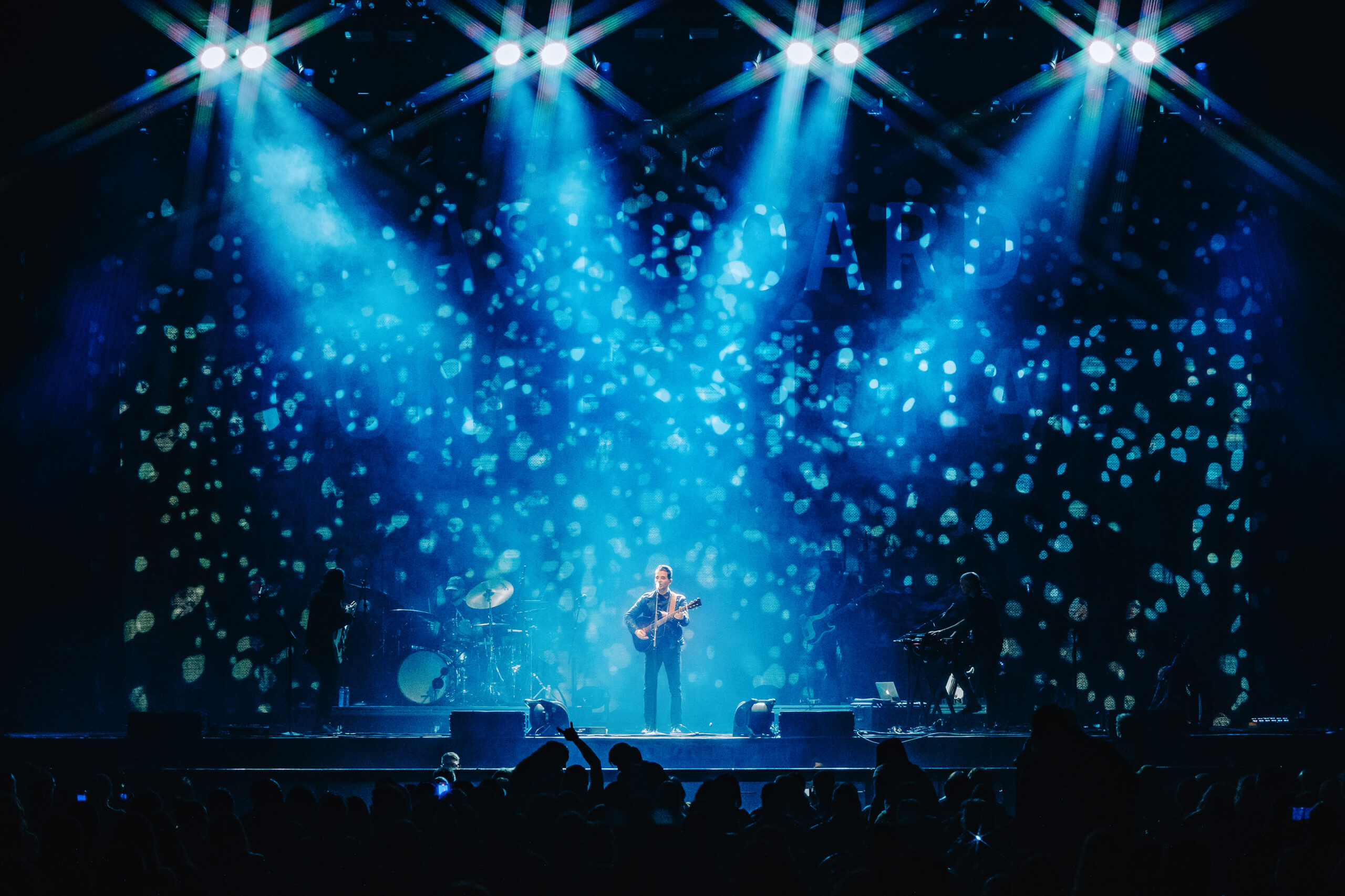
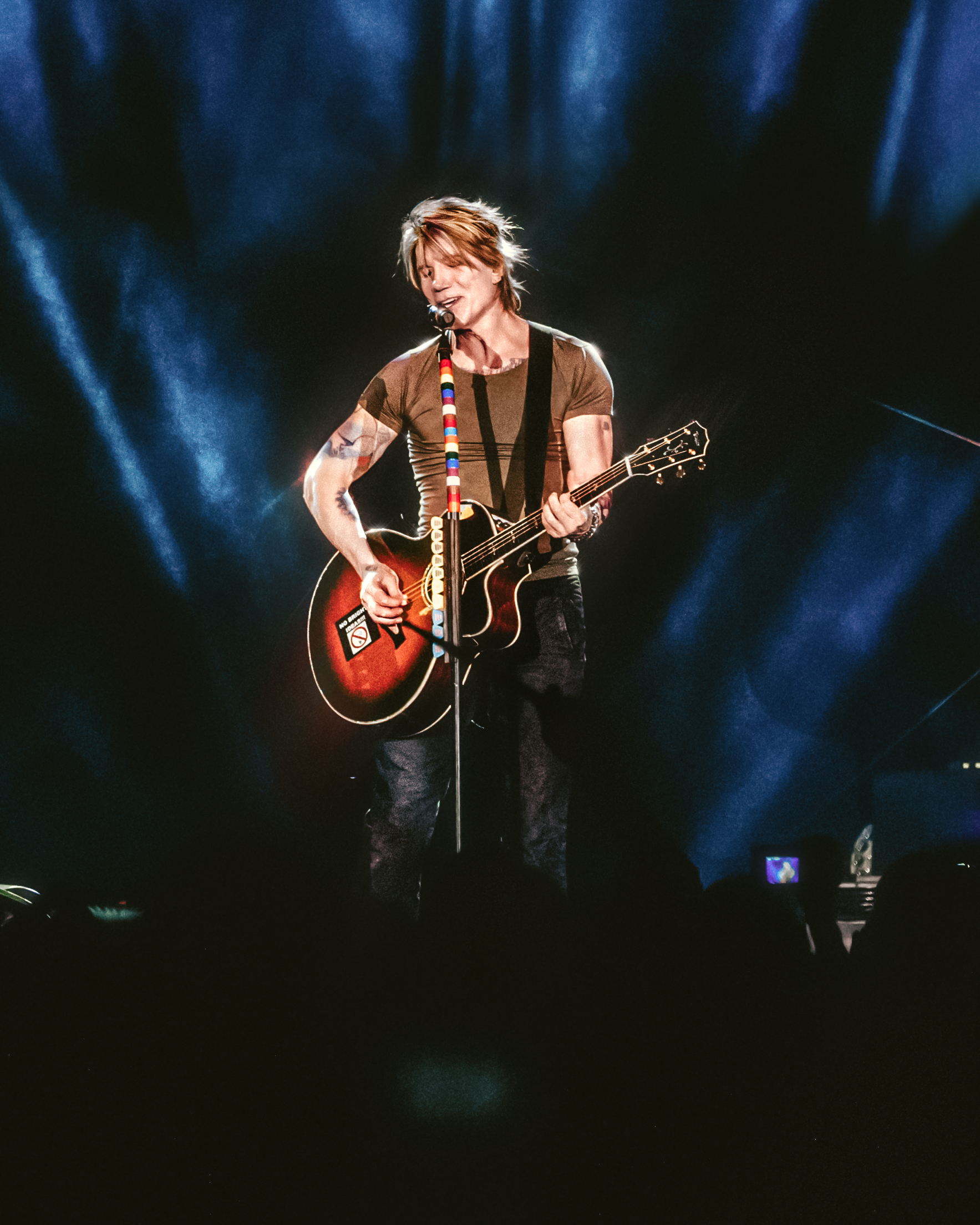
Returning to Calgary for their first-ever stadium show in the city, the Goo Goo Dolls leaned into a stripped-back production that felt less like an arena spectacle and more like an intentional effort to dissolve the barrier between band and audience — just the songs, with nothing to hide behind. The production tricks weren’t missed, as the Dolls wasted no time affirming everyone why they were there, rallying off bangers from their heyday, “Naked” and “Slide,” with the first half of the set firmly entrenched in their hitmaking era. John Rzeznik’s vocals were worn-in and frayed along the edges, like a new–old pair of vintage Levis. Time may have forced Rzeznik to subtly ease off the higher register, but the crowd instinctively rose to meet him, filling in the choral octaves without hesitation.
“Name” arrived like a touchstone and the set’s first true sing-along. This was the Dolls at their best; unguarded and bittersweet, tapping into a universal emotional language that keeps their hits on the charts decades later. The acoustic stretch included the aptly named “Acoustic #3,” a tender ode Rzeznik wrote about his late mother, who passed away when he was 16. “I wanted to put myself in her shoes for a minute and see what that must’ve been like for her.” The intimate moment, no doubt owing to the number of mothers in the audience, prompted an impromptu sea of cell phone lights from the crowd, with Rzeznik visibly moved by the gesture.
With the majority of their hits behind them, save for the big one, the set began to lose some sentimental momentum. A brief showtuney piano detour swerves into a hard rock breakdown. Robby Takac’s grizzled vocals take over for a few songs. Lyrics feel a bit less poignant, with standard fare metaphors about love and life. “Love is like the ocean. Life is a message. Let love in.” The crowd sticks with it, anxiously awaiting the big moment, but some of the allure starts to soften, and the bar-rock influences take over.
But the crowd is back on their feet with “Broadway,” a deeper cut from Dizzy Up the Girl, but nonetheless memorable. Band introductions cue that they’re reaching the end, and “Iris” arrives like a triumphant victory lap. “Help me with this one, Calgary!” Rzeznik says as he hands the mic to the crowd, turning it towards the audience for the climactic finale. It’s catharsis, and undeniably moving to hear an audience of thousands belting out every word. No encore necessary, the band rightfully understanding that there’s no topping their crowning achievement.
What makes a song like “Iris” so enduring? Maybe it says something about the moment; abject disillusionment paving the way for storytelling in the way only music can, a feeling that is all too familiar across generations. “With Gen Z, we’re in a very similar phase [to the ‘90s],” said audience member Lok, 18. “People feel like we’re at the end of history [again].” Marla, who fondly remembers cruising around in her Jeep listening to the Goo Goo Dolls in the ‘90s, feels like the connection is more straightforward. “It’s still about the music,” she said. “I find these artists spend more time with the lyrics.” The words from her favourite Goo Goo Dolls song seem to build a bridge between both generations: “We grew up way too fast, and now there’s nothing to believe, and reruns all become our history.”
As the decades pass, it’s difficult to assess whether timeless hits are accidental, more stumbled-upon than engineered. 30 years later, Robby Takac still isn’t sure. “[Iris] was recorded as a one-off … as far as having a hit record, that was the last thing on our minds,” he said. The band’s recent wave of success seems inexplicably tied to how we remember the past and interpret the present.
For many, it’s difficult to parse the reality of what life was like in the ‘90s. The decade seems to have transcended lived experience into a space of collective mythmaking, buoyed by a generation that wasn’t even alive when it occurred. But nostalgia at its core isn’t about reliving what was; it’s about chasing the feeling of it, imagined or otherwise. Why does it matter if it really happened that way? After all, memory is just another rerun, a story from a time when those pieces seemed whole, when we felt safe, and when Marla had her Jeep.
When “Iris” took over the Scotiabank Saddledome, the answer felt less important than the experience itself. Everyone became a ‘90s kid again; who cares if they were never really there?