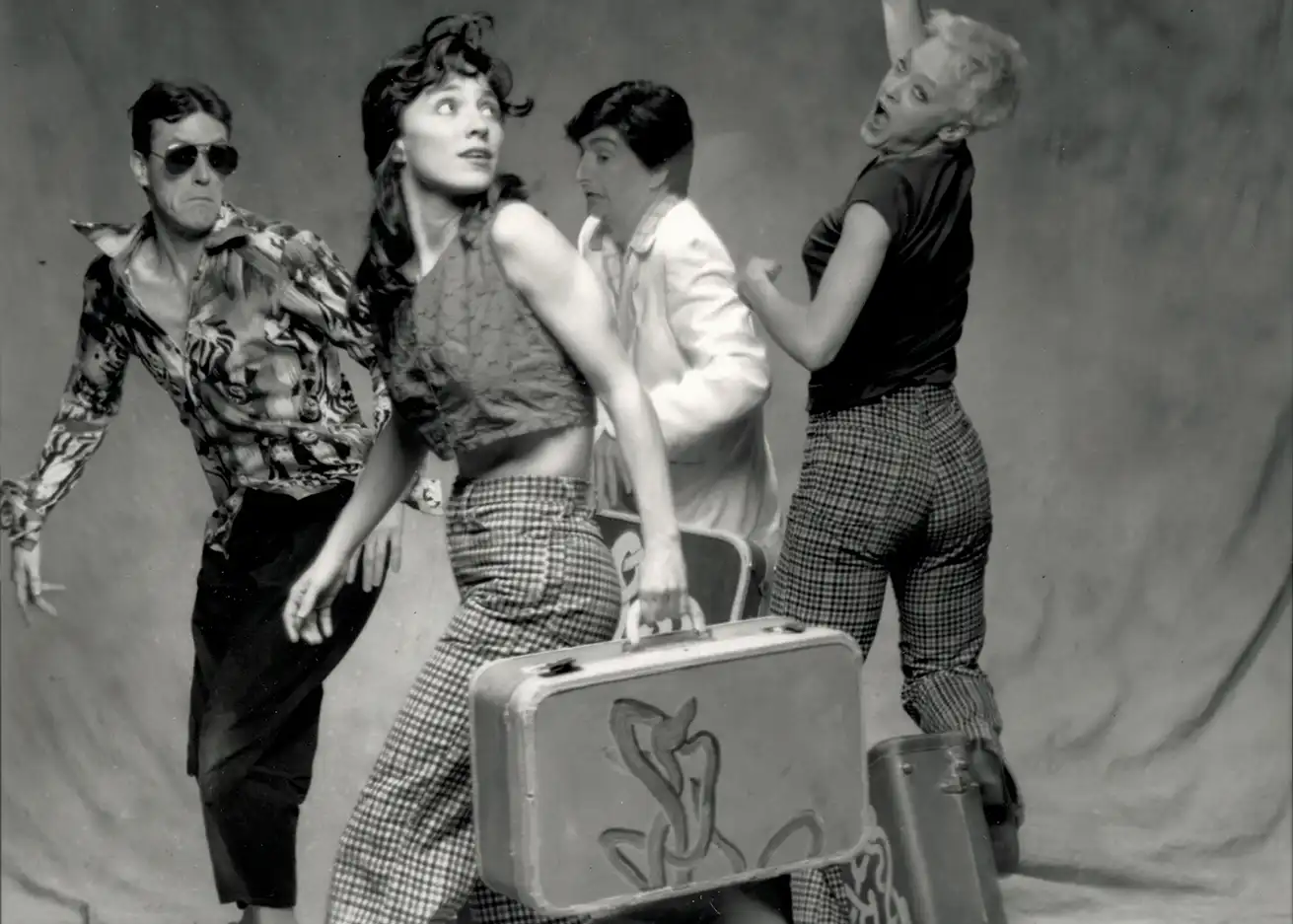
While today’s theatre nerds browse Instagram for a new cutting-edge show, 40 years ago, avid audience members dialled mysterious phone numbers for an address to reach something called the “Secret Elevator Experimental Performance Festival.” Friends and strangers gathered at the secret location, rode an elevator to an office-turned-performance space, and witnessed what would be considered the first High Performance Rodeo.
“The first festival was super guerrilla and kind of punk,” said Oliver Armstrong, festival producer. “That’s one of the things that’s important to us … We want it to be exciting.”
Over the last four decades, One Yellow Rabbit’s High Performance Rodeo has put Calgary on the map as a hub of avant-garde, innovative theatre. For three weeks in January, audiences are treated to a wide array of live art, including theatre, music, dance, comedy, and more.
And while audiences aren’t getting shoved in sketchy elevators anymore, audiences are still promised a wild ride.
TAKING RISKS
Being in the scene for 40 years, with a cozy little home in the Werklund Centre, affords One Yellow Rabbit and the High Performance Rodeo some security in what they can produce. But that kind of security comes with trade-offs, a notion that wasn’t lost on the One Yellow Rabbit team — or “Rabbits,” as they call themselves.
“[It’s] something that our founders really started noticing pretty quickly when they started to achieve levels of success,” said Armstrong. “Sometimes fitting into what the funders require or what the public institutions expect can appear to offer some limits.”
Balancing the art that funders are willing to support with the risks that are staples of the Rodeo is at the core of the festival’s programming.
While major organizations like Calgary Arts Development and the Alberta Foundation for the Arts may have helped make the Rodeo as big as it is today, audience ticket purchases allow the fest to stay avant-garde.
“Sometimes we have to make choices that are independent,” said Armstrong. “We still have to push boundaries, because that is part of our DNA.”
While the festival’s reputation is strong, staying relatively small helps it maintain a high-quality lineup year after year.
“The festival obviously has grown a lot, [but] it doesn’t get bigger every single year,” said Armstrong. “Constant growth isn’t something we strive for. We want it to be sustainable.”
Keeping the festival at a sustainable size allows programming to include some truly off-the-wall performances. The festival can include events that may not resonate with all audiences, an inclusion that’s just as important to the Rabbits as fan-favourites are.
“Not every single show that every single patron sees at the rodeo is going to be something that they fall in love with,” said Armstrong. “But everything that they see is going to be somehow undeniable.”
NEW BLOOD
Many of One Yellow Rabbit’s founding members are still involved in HPR 40 years later, and they’ve seen it all. So how do they keep the events “undeniable?” “The weirdos find us,” said Armstrong.
The “weirdos” in question who are challenging norms are a fresh batch of theatre artists taking to the stage with new works. “I think they’re bringing their game and elevating it, and I think they’re bringing their training and letting it loose,” said Blake Brooker, One Yellow Rabbit’s artistic director and founding member.
“All these people here are hustlers. They’re doing something they love. They’re doing something that is dangerous. It’s risky to be out there.”
— Blake Brooker
Brooker and his colleagues have been in the game long enough to know that theatre and the arts are not an easy industry to work in. Young artists are sacrificing job security, insurance, and consistent pay … and yet, they do it anyway.
“All these people here are hustlers,” said Brooker. “They’re doing something they love. They’re doing something that is dangerous. It’s risky to be out there.”
To support young artists willing to take risks, One Yellow Rabbit offers two youth programs: Beautiful Young Artists and Beautiful Young Students.
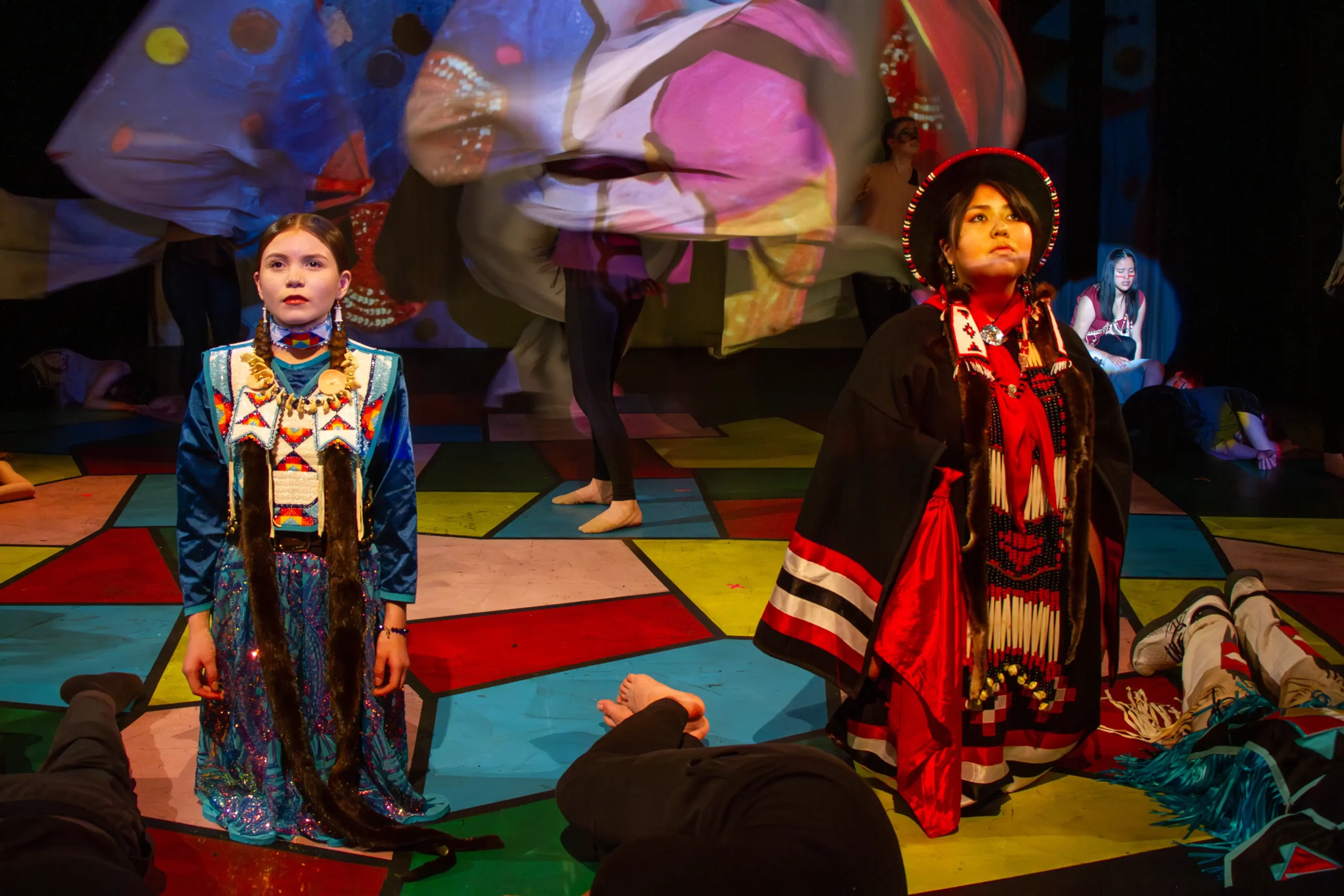
As part of One Yellow Rabbit’s Beautiful Young Students program, which focuses on outreach to secondary school students, Armstrong visited the Strathmore High School drama class. Students from this class are debuting a production called New Blood at the High Performance Rodeo, directed by their drama teacher Deanne Birch.
The students collaborated with Siksika knowledge keepers and elders to create a moving collection of pieces about Siksika First Nation Chief Vincent Yellow Old Woman’s journey from the trauma of residential schools to becoming a chief.
Even when bringing a show to the High Performance Rodeo, the students Armstrong spoke with were unsure whether pursuing a career in theatre was really possible.
“Whether or not any of those students will continue to additional training or will become working artists and then [come] back to our festival, we can never say,” said Armstrong. “But if we’ve done our best to share and be open and try to plant some seeds, then we’ve done something valuable.”
In addition to the student outreach program, One Yellow Rabbit also has its “Beautiful Young Artists” program. The program is a three-year commitment that provides artists with training and performance opportunities. One of the artists in the Beautiful Young Artist ensemble is Calgary-born Lauren Brady, whose show Swan? takes to the HPR stage after successful international runs at the Edinburgh and Adelaide Fringe festivals.
“This is almost like a homecoming,” said Armstrong. “Everything that she’s learned from her contemporaries, literally around the world, she’s bringing back to a Calgary stage. That’s super impressive and important to us.”
It’s young artists like Brady and the Strathmore High School students who are bringing a current perspective to the High Performance Rodeo.
CREATING JOY
The cost of living is a top concern for many people right now. Everyone is paying extra close attention to where they’re spending their dollar, a fact that the Rabbits are well aware of.
“Everything’s more expensive. Everything is difficult,” said Brooker. “When you get someone to part with their hard-earned money and come to an event … You want to make sure they’re getting their money’s worth.”
In programming the festival, One Yellow Rabbit emphasized “joy” in the audience experience. When there’s so much going on in the world, theatre and art exist as a place for people to escape and feel seen.
“There are all these different challenges,” said Brooker. “So it feels like there’s an extra responsibility to be entertaining and fun.”
Armstrong noted that getting audiences into seats became harder in the post-pandemic years.
“Reducing barriers to [audience] access is more important than ever,” said Armstrong. “Whether that’s in the form of ticket prices, or even just something as simple as telling them what their experience is going to be in advance.”
There’s always a selection of free shows at the High Performance Rodeo for anyone looking for a sampling of the festival (Karen is one such offering this year), along with artist and student-priced tickets.
But for those who are willing to pay but aren’t sure what to choose, this year’s Rodeo resurrects some old festival favourites, including Dream Machine.
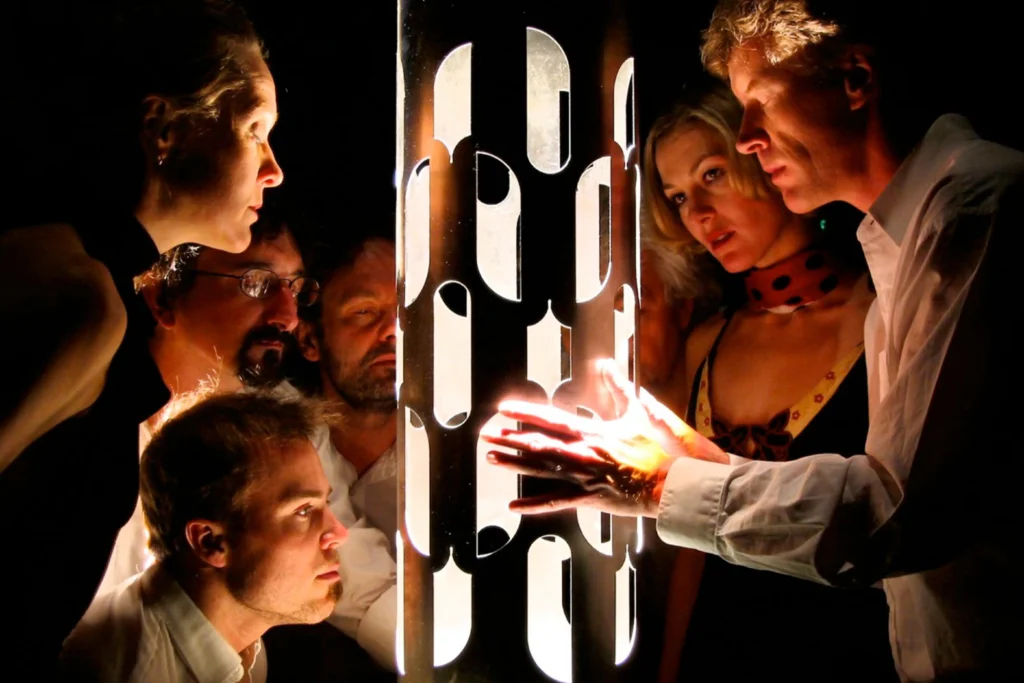
Dream Machine was last performed by the One Yellow Rabbit ensemble in 2006, written by One Yellow Rabbit founding member Blake Brooker. Not just a remounting of an old show, Dream Machine serves as a metaphor for those founding members passing the torch.
“There are young artists now playing the roles of some of the characters that were played by original members of our ensemble who are no longer with us,” said Armstrong. “It’s this really interesting mix of young new performing talent alongside the actual veterans of performance in Alberta.”
While the Rodeo may be bringing back some fan favourites, catering to the audience’s desire for joy does not compromise the festival’s commitment to producing subversive art.
“Are our choices changing because of who the audience is and what they want to see? Yeah, a little bit,” said Armstrong. “But we also have so much variety and so much flexibility that we’re really not worried about what we’re missing out on.”
In total, 25 productions will take to the stage over three weeks. If you don’t want to see something tried-and-tested, there are plenty more shows to choose from.
“Every year we try in some way to take a risk,” said Armstrong. “These are raw young theatre artists or performance artists, and I feel like they have something to give, even if it’s just an experiment.”
The High Performance Rodeo rides from January 13 to 31. Explore the full lineup at oyr.org.