Regardless of how one feels about the digital age, one beautiful byproduct of nearly everyone having a smartphone in their pocket is the democratization of photography. An artform that was previously the purview of a select few — notably those who could afford the equipment — has become accessible to the many. With that, we’ve seen the advent of social media and the digitization of sharing family moments, selfies, and even fine-art photography on global platforms. What once was intended to be developed and hung on the wall is now not dissimilar to a passing fancy, a scroll-worthy moment almost as fleeting as the act of capturing an image itself.
Perhaps in reaction to this trend, it’s unsurprising that there is a rise in analog photography practices, including film and cyanotype, an art form predating film photography, initially invented to document botanicals. A return to something a little more tangible.
“[Analogue photography] is the root of the medium. Those are historic practices, but I think that there is definitely an obvious interest in a return to analog processes. It’s way slower and more tactile,” said Emma Palm, local photographer and festival manager with the Exposure Photography Festival. “I think we all spend so much time on screens, and so there’s this real, like embodied, meditative quality to working with film or cyanotype or alternative processes.”
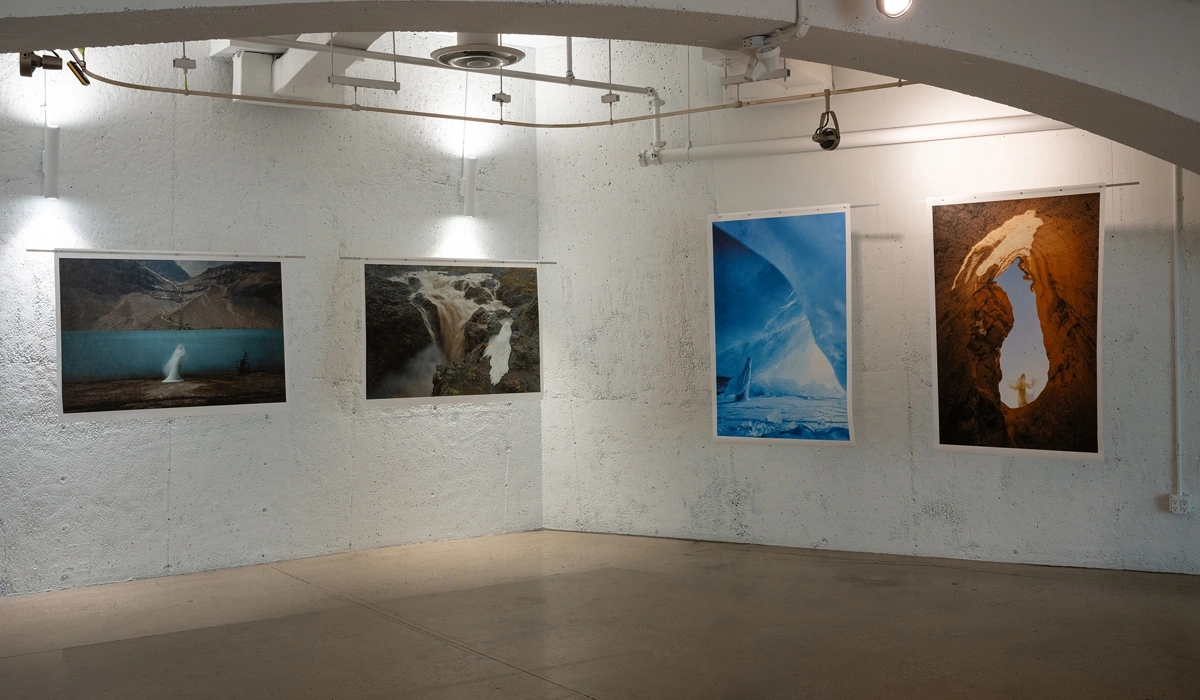
Palm adds that a number of entrants to the festival’s competitions (the North West Showcase and International Open Call) are experimenting with analogue photography — including practices like film souping, which uses non-traditional liquids to develop film images.
“There’s a different level of intention and attention. For me, it really separates my art practice and my image making from the pace of the daily grind, or the pace at which we can consume and make images,” said Palm.
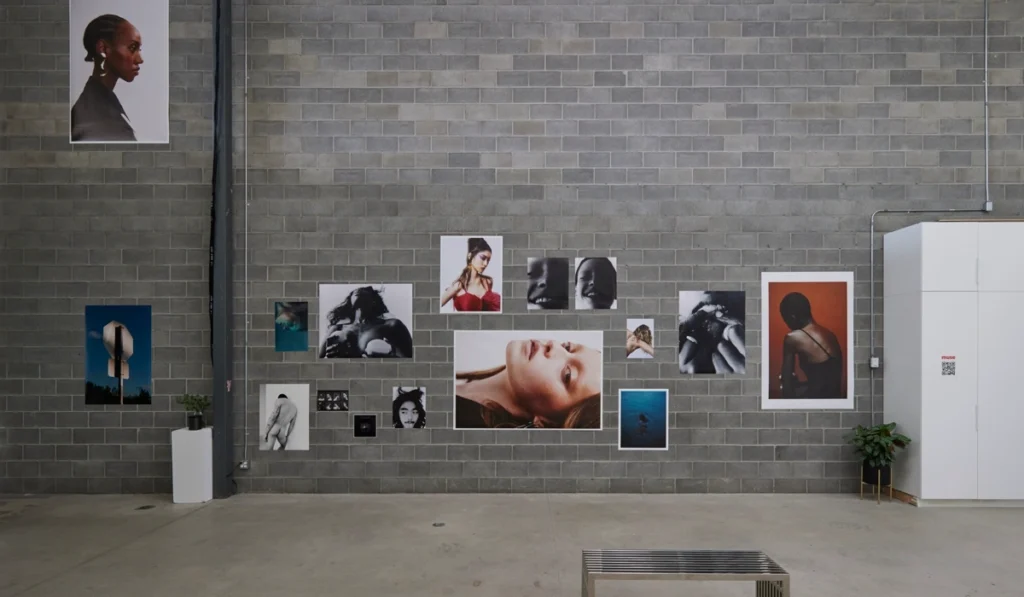
Palm’s sentiments are echoed by Hayley Villanueva-Eyre, co-owner of Neat Film Lab, a film developing and scanning company located in Calgary’s East Village. Neat is participating in Exposure Fest by curating an exhibition of 15 images developed or scanned at the lab or submitted via the business’s open call.
“I like that when you take a picture with film, you’ll usually just be happy with what you’ve got, because you got something generally, instead of taking hundreds of pictures digitally,” said Villanueva-Eyre, who is also a photographer. “Not being perfect makes you slow down. Everything in our world is so fast and loud, and film is very meditative.”
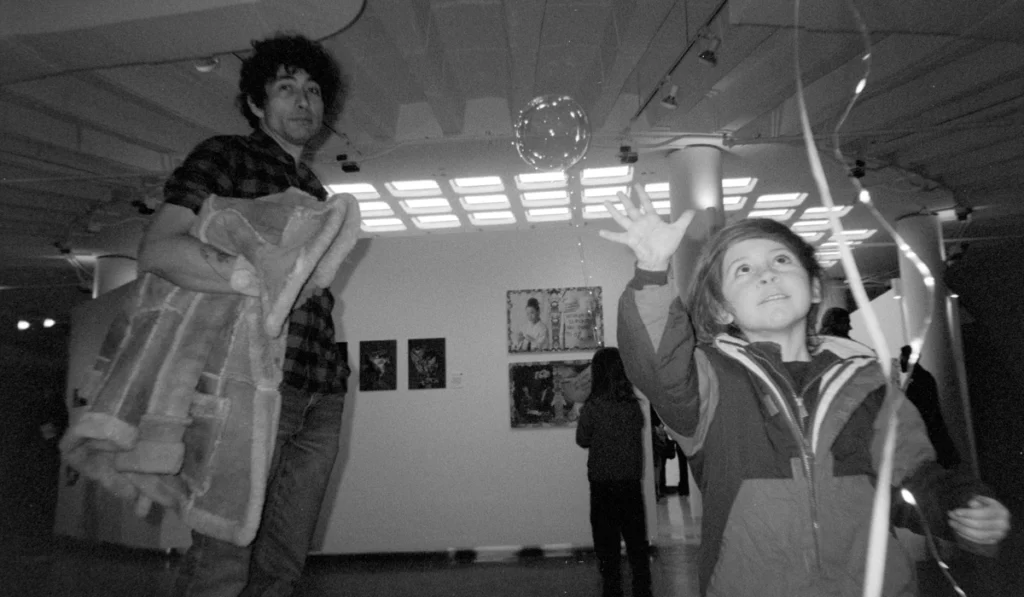
Hosted out of The Boutique at Nvrlnd (with the images printed by Royce Howland Print Studio), the exhibition is titled What We See, referring to what Neat sees throughout the year and wants to share with the community. While the exhibition runs all month long, the opening night is on February 1 from 7 to 10 p.m.
The tangible and meditative qualities of analogue photography lend the medium a nostalgic feel, a trend that Villanueva-Eyre said is being echoed in many other hobbies, such as listening to CDs and records or fixing up old cars.
“I think something that allows you to meditate while also being creative is really needed,” they said. “So I’m really happy to see that film is coming back, even though it’s an expensive hobby.”
Indeed, while there are methods of lowering the barrier of access to film photography, both technically and financially, such as disposable cameras (which Neat Film Lab also develops), it’s not the only analogue medium making a comeback — both to the photography community, and to the Exposure Festival.
Leia Guo is an interdisciplinary artist and photographer who initially discovered cyanotype as a means to play with light and meld her passion for photography with glass blowing. A very early art form that influenced what photography is today, cyanotype was invented in the late 1800s. It is the process of capturing an image, typically by placing an object on chemically washed paper that is then exposed to sunlight. The resulting chemical reaction captures the outline of the image, usually against a Prussian blue background.
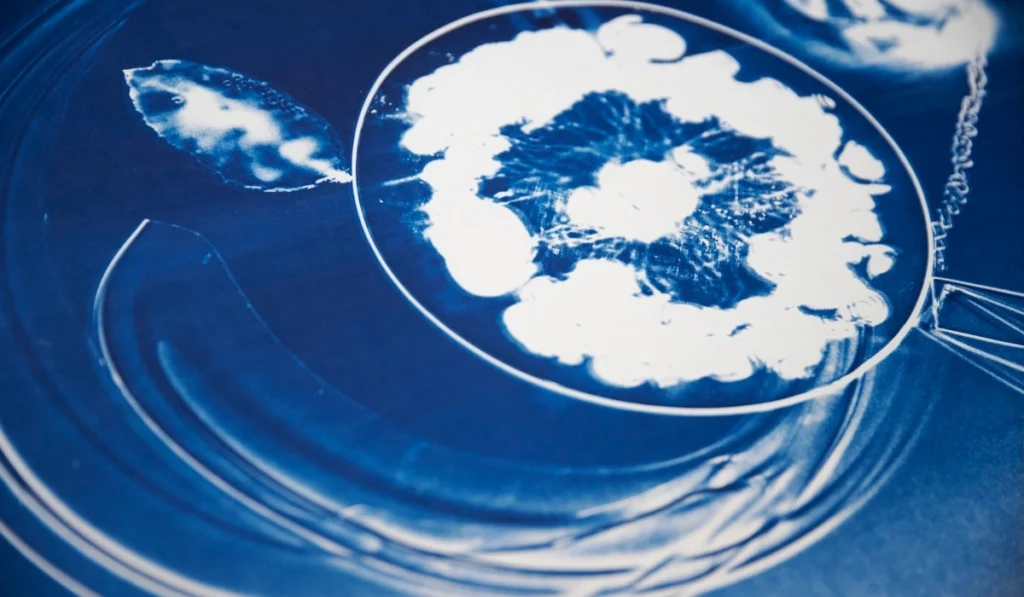
“Cyanotype ended up being that perfect mix of something that was accessible for me to do a lot of experimentation with objects and with imagery, without having to dedicate myself to a whole 12 hours in the dark room,” said Guo. “It was also a way for me to physically use the light in the places that I wanted to make art about. I would actually go to these locations and be able to sit there and create what I wanted to create with the light that was existing there.”
As part of the Exposure Photography Festival, Guo is participating in a panel discussion called “Canadian Cyanotype, Then and Now,” alongside Mireille Perron and Cy Yang-Smith. The panel discussion will be hosted at the Nickle Galleries on February 12.
Guo, who also teaches photography at a local Calgary high school, said she is noticing a trend in younger generations yearning for nostalgic art practices.
“I’m seeing a lot of young students getting their feet into photography, interested in film and in analog stuff, because they want to try something that they’ve never really seen before,” she said. “And they want to be able to see it come alive in their hands in a different way.”
Bringing nostalgic art alive is at the forefront of the Lougheed House’s Exposure Fest exhibit, which will showcase a range of photos from the Lougheed family album, with a focus on the family’s beloved pets.
“We have this great green space outside, which is part of the original footprint of the house, and it’s used as a dog park,” said Cassandra Cummings, senior manager, collections & curatorial at the Lougheed House.
“So we have many animal visitors, which is amazing. And as we were going through the family album, we really noticed how much the Lougheed family loves animals and loves their pets.” Cummings said that Lady Isabella Lougheed was the president of the Alberta Cat Club, whose letterhead stated it was “an organization for the prevention of cruelty to cats.”
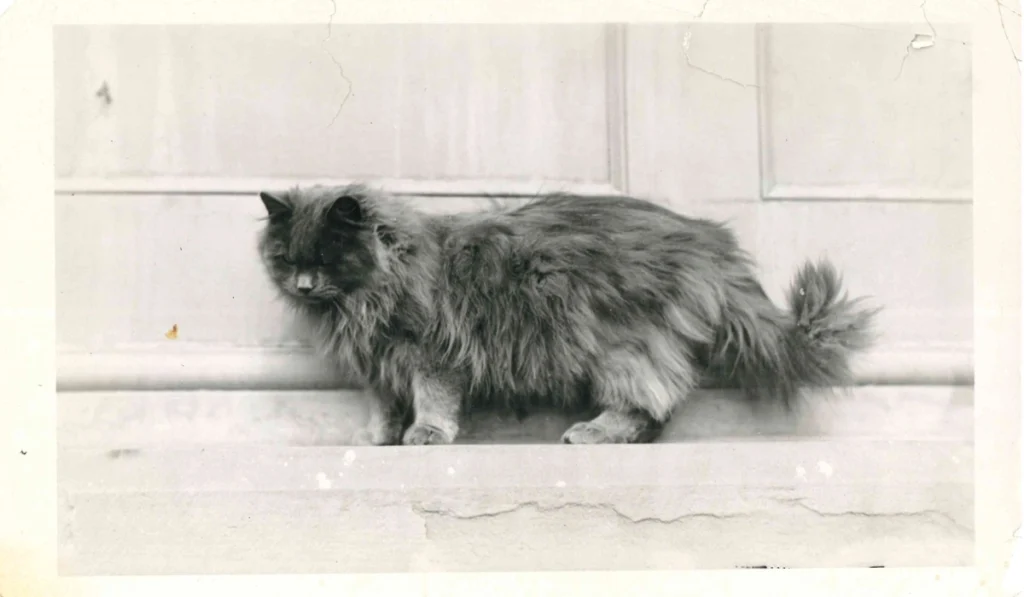
With many of the photos taken during the ‘20s, something Cummings noticed while reviewing the family album was how similar the images were to those a Calgary family might take today. She adds that it’s likely the album belonged to Edna Lougheed, the daughter-in-law of Lady Isabella Lougheed. “She has very thankfully left handwritten notes on many of the photos. There are a couple in particular that say ‘me in Banff, or me and Edgar in Banff.’ The way the captions are written … they are very much like family photos that we would take now.”
The exhibition, titled Archival Animals: Photos from the Lougheed Family Album, runs until March 1. The exhibition will take place outdoors at Lougheed House’s green space and dog park. Viewers are encouraged to take photos of their own beloved animals and tag the Lougheed House on Instagram (@lougheedhouseyyc). In a sense, bringing the nostalgia of the past full circle.
“Having that tangible connection to something really means something to people,” said Cummings. “I think that’s the importance of kind of nostalgia and history in general. Is that tangible connection to something that’s real and putting yourself in the place where generations of people have come before you.”
[NOTE: This story has been changed from the print version to properly reflect the history of the Alberta Cat Club.]