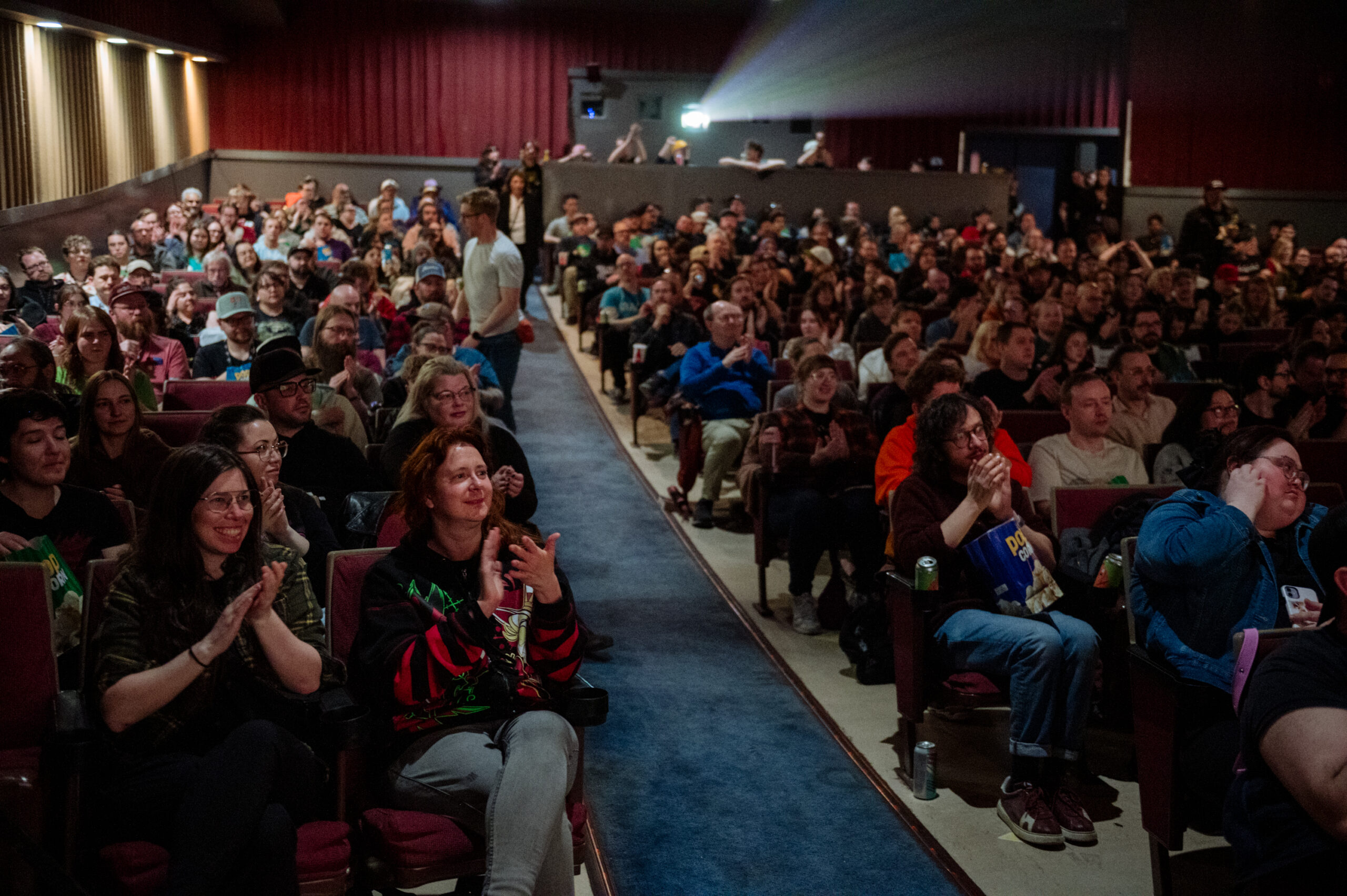
Rather than being tethered to a traditional movie theatre, cinema today can take many forms. Micro Cinema at Werklund Centre is one example. Initially called Broadcast Lab, it was created as a space and media gallery for audiences to experience art every day as they move through the space.
The small-format cinematic works include experimental film, video art, animation and short-form documentary, in which artists explore moving images and reflect on personal experiences in relation to the city and the world.
Since 2024, Micro Cinema has collaborated with CIFF as part of the festival’s “constellation” model that sees several screens in different venues around the city connecting film to Calgary’s broader cultural infrastructure.
Sanja Lukač, Associate Director, Artist Development & Curatorial at Werklund Centre, sees it as a way to support creators while strengthening connections between visual art, media art, and film.
“Artists working with moving images often move between these worlds,” says Lukač. “It has been meaningful to create multiple pathways together — so artists can find the audiences, collaborators, curators, programmers and contexts that are suitable for their practice.”
This year’s selection features three works that offer different ways of looking at migration, belonging and our place in the world.
Just Another Nomadic Dream
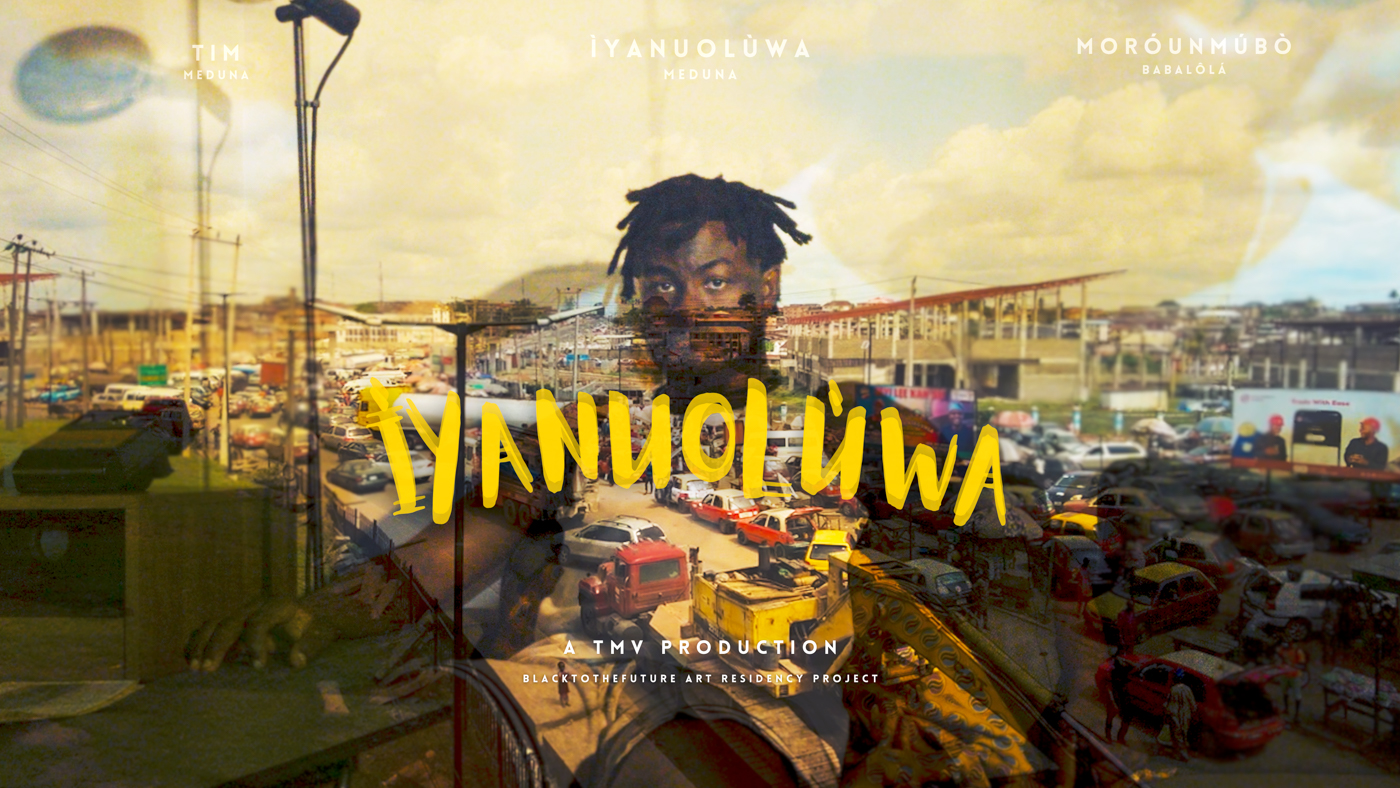
Iyanuoluwa (Tim) Meduna
In this film, Meduna reflects on immigration and how the places he has moved through shaped his identity and sense of home. Using cut-collage, he brings Lagos, Calgary, New York, and Ibadan into a single frame.
“I’m interested in what it means to move between places, to adapt, and to find or create a sense of belonging within new environments,” he says.
The film explores migration, belonging and the tension between vulnerability and strength, inviting viewers to reflect on their own journeys.
“My definition of home has broadened significantly since leaving Nigeria,” says Meduna. “Rather than being defined solely by geography, it has become something more expansive, something I can carry, discover, and create.”
Now based in Calgary, he draws inspiration from the city’s diverse landscapes. “The environment itself encourages me to think visually and to imagine what kinds of stories can exist within these landscapes.”
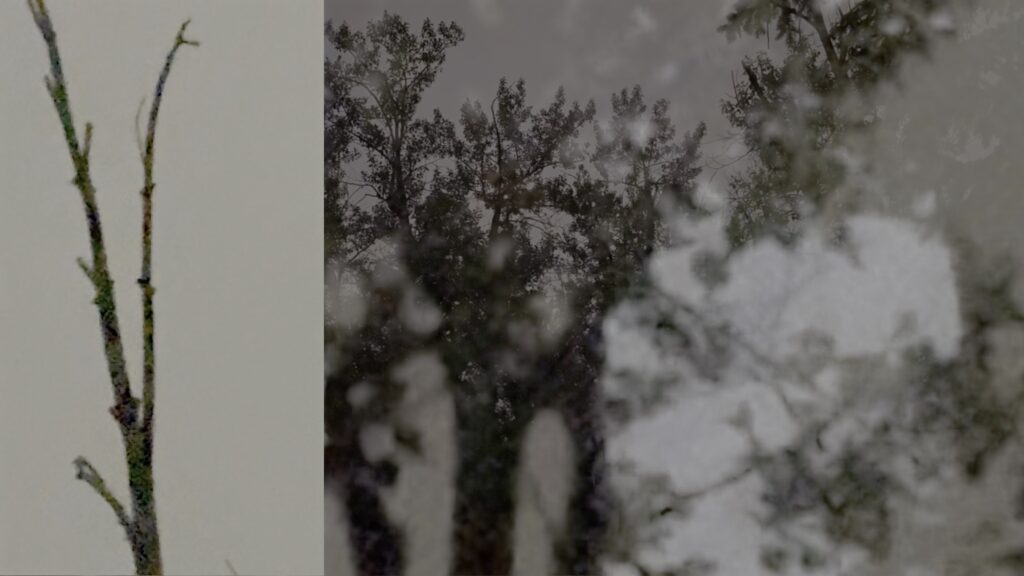
Taciturned
Connor Cook and Yeisen Chang
An experimental audiovisual work, Taciturned is what Cook describes as an artistic conversation between himself, Yeisen Chang and the Elbow River. Much of its production was spontaneous, unfolding through events over two years, including Cook’s Radiate Artist Residency and his connection with Chang through the TD Artist Incubator, where she later wrote and performed the poetry for the work.
Shot entirely on a cellphone, the film captures uncanny, grainy visuals that echo the river’s soundscape. The experience becomes a form of “visually-assisted deep listening,” where the environment shapes the creative process.
Taciturned deliberately turns away from action toward listening and being present in the moment. “Deep listening is, to me, a healing engagement with the moment, imperfect and uncomfortable though it may initially feel,” says Cook.
“The deeper I listen, the more I run into the possibility that we humans aren’t the centre of the universe, that we certainly aren’t its only voices, and that we are actually quite a lot less the ‘drivers’ than we like to think.”
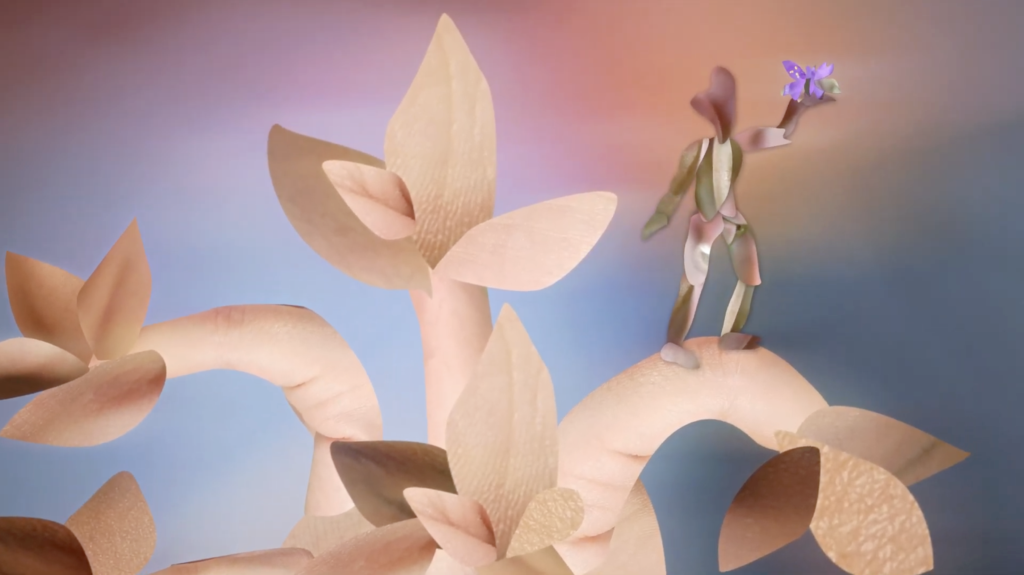
Shapes of Resilience
Maria Fernanda Munar
Maria Fernanda Munar’s practice is rooted in photography and collage, transforming small fragments into something new. Shapes of Resilience extends that process into animation.
The film draws on the plant world as a way of connecting with Colombia, where Munar grew up. “Where I’m from, nature thrives in warm weather year-round and is a lush part of everyday life, so connecting with the plant world feels like a way to connect with my home,” she says.
The film’s central character is a succulent she remembers from her aunt’s home — a plant she describes as beautiful and resilient. “I wanted to take that quality and personify it as a character that is traversing through a land of body parts, and bring the viewer into an abstracted journey of adaptation and transformation.”
As a first-generation immigrant, Munar connects the theme of belonging to her own experience of building a life in Canada. “When I first arrived in Canada, all I wanted to do was assimilate to belong to this new place,” she says. “As I’ve grown, I’ve realized that the more I embrace this fragmentation, the more whole I feel.” It’s a tension she continues to explore visually through her art.
Experience Micro Cinema for free on monitors between the Jack Singer lobby and 8th Ave entrances to the Werklund Centre.
Daily from 7 a.m. to 10 p.m.